TeachMeet at the Zoo – a different kind of Professional Learning

Last week I had the privilege of leading a science-flavoured TeachMeet with Matt Esterman at Taronga Zoo. With a great view of the monkeys at the zoo, over 70 educators from pre-service teachers, primary school teachers, high school teachers, university staff and other educational institutions, gathered to share ideas on ways to make learning more effective for our students. There were teachers from government schools, Catholic schools and independent schools sharing their classroom practice with each other with the aim of improving teaching and learning for all students.

We had presentations on differentiated learning, learning design, inquiry based learning, using iPads in the science classroom, mash ups, social media and many other ideas and strategies to enhance learning for our students. Mitch Squires and Jackie Slaviero captured the crowd with their talk about NASA space camp. We got to make a pocket solar system with Rob Hollow from CSIRO to experience a way to introduce students to the scale of the universe. We also got to pet a snake to learn about how Taronga Zoo’s education programs are addressing sustainability in the Australian Curriculum.


What I really like about TeachMeet is that it is a different kind of professional learning. You get to see real teachers sharing ideas and strategies they have implemented in their classrooms. You build cross-sector networks and have opportunities to share and learn from teachers from government, Catholic and independent schools. You are also exposed to many new ideas in a very short amount of time.

What I like most of all is that teachers volunteer to attend TeachMeets. Teachers attend out of their own time because they want to learn. Presenters are not paid (they might receive a chocolate koala for their efforts) and are sharing their practice because they want to. I think this really shows the collaborative and generous nature of teaching as a profession.

So if you haven’t been to a TeachMeet, it is very worthwhile to check one out. If you been to one, I’m sure you will go to another one very soon. To find out more about TeachMeets in Sydney visit this website and join the Facebook group.

A SOLO update

Four weeks have passed since the start of the year so it’s a good time for me to reflect and evaluate my SOLO journey. This year my focus is on implementing SOLO (Structured Observed Learning Outcomes) in my science classes. The purpose of this journey is to explore how I can allow my students to become better self-regulated learners, to become better at assessing their own performance. Over the Christmas holidays, I used a book called Using SOLO as a Framework for Teaching to re-design the units of work in Term 1 so each unit is framed around learning intentions and success criteria for SOLO.

Here is an example.

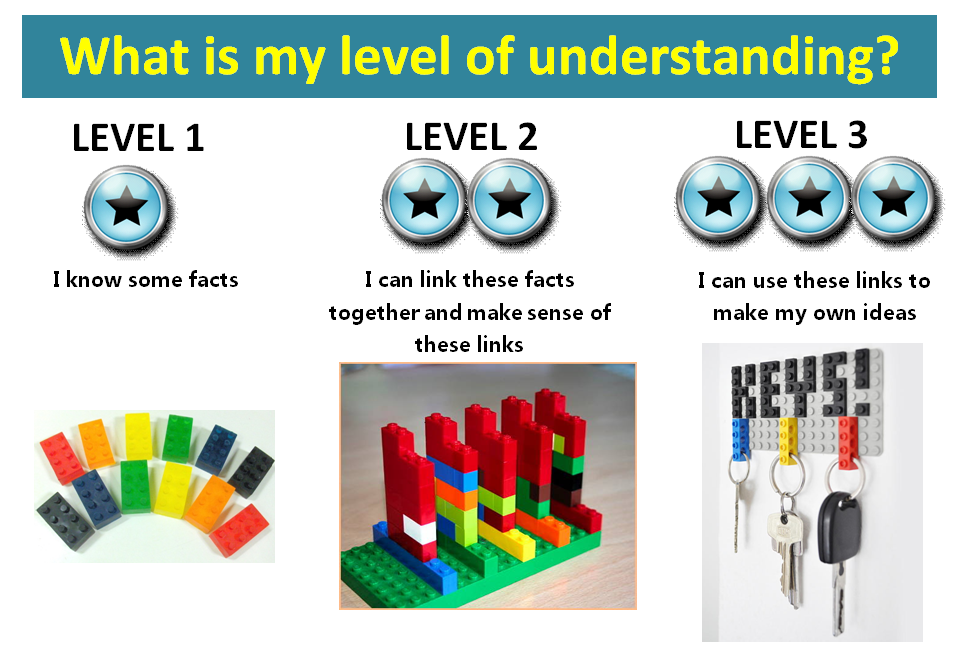
I decide to use ‘levels’ rather than the proper terms for SOLO to make it more student-friendly.

Level 1 = unistructural and multistructural

Level 2 = relational

Level 3 = extended abstract

The poster below has been made for students to see in the classroom. The ‘levels’ were also explained to students at the start of the year and briefly in each lesson.

SOLO

All my lessons now start with an explanation of the learning intentions and success criteria. At the end of the lesson, each student looks back at their work and tick off which level they have achieved.

Through informal conversations with students, they say they like it as they know what they are expected to be able to do right from the start and they like ticking what they can do; it lets them explicitly see what they have learnt.

Over the next few months I’m going to embed the SOLO levels to self evaluation and peer evaluation tasks. Eg. Students marking their own and each other’s writing based on SOLO levels.

However, I need new ideas on how to better implement this. At the moment my students copy the learning intentions and success criteria in their books. One positive about this is that it acts as the settling down activity. It also makes the context of the activities they complete in their books clearer when they revise. Now they have a lesson title, learning intentions and success criteria right before the glued in worksheets, writing tasks, etc. What I don’t like about it is that copying learning intentions and success criteria is not a ‘minds on’ activity. I used to do quick quizzes, which are short questions that revise the previous lesson. While they are not the highest order questions, they do require students to use their brains more than copying text from the board.

So here’s my dilemma: Should I continue with my current routine of having students copy learning intentions and success criteria or replace this copying with quick quizzes and have the learning intentions and success criteria printed on slips of paper for students to glue into their books? Note that half of my classes require strict routines and do not cope well with changes. I’m concerned that it if I change things now, it might throw out the work I’ve done so far to get them into this routine.

What do you think I should do? How do you set up learning intentions and success criteria in your classroom?

So, how did I do? Getting feedback from students in end-of-year evaluations

While going through my Twitter feed a couple of weeks ago, I came across Bianca Hewe’s blog post on gaining feedback from students in order to improve your teaching. My year 7 class this year, which I have taught for English, Maths, Science, Geography and History, have been completing weekly evaluations on how they have been progressing academically and in their project work each week. They have also competed end-of-term evaluations. I have always valued student feedback, mainly because I think they are the best judges of my teaching and are the best placed to provide me with advice on how I can improve my teaching and their learning. Also, I think it emphasises that the teacher is a learner as well. This year we have been using Geoff Petty’s goals, medals and missions model of feedback and have created an atmosphere that everyone always has something new to learn and something they can improve on. So asking for students to evaluate my teaching further emphasises the teacher as a learner and further enhances the feeling of a learning community for the class.

For the end-of-year evaluation, I decided to move away from my usual multiple choice ranking questions in Survey Monkey and modified the questions on Bianca’s posts instead. I thought having 10 short answer questions will give me a better insight this time, especially into the classroom atmosphere and the relationships that the students have formed with each other. So here are the 10 questions I asked my year7s, a summary of their responses and my reflections on their responses:

1. What was the nicest thing someone in our class did for you this year?

Year 7s said that the nicest thing their classmates did for them this year were to share food with them when they forgot recess or lunch, lend them equipment such as pens, helped them with maths and made them feel welcome. I think the integrated curriculum approach, where year 7s stay in the same group with the same teacher in the same classroom for 5 KLAs, have created a very close-knit learning community. My class works like a team. They look out for each other and help each other.

2. What was the most challenging part of our class for you?

Year 7s came up with a mixture of responses for this question. Some of their responses include working with others productively in projects, writing persuasive texts and maths. Not surprisingly, algebra came up very frequently as something they found challenging. To be fair, these year 7s are achieving at a much higher level than any other similar cohort that I have taught, but they have very high expectations of themselves.

3. If you could change one thing that happened in our class, what would it be?

Seating plans and the design of the classroom came up quite frequently in the responses. I have been experimenting with different arrangements of furniture in the classroom that will allow students to easily move furniture to suit different types of activities. I haven’t got it down perfect. Some of the things I have difficult are the placement of students in a way that minimises disruptions and also allows everyone to have a clear view of the main presentation areas (students have a seating plan for most activities and are allowed to choose where they sit and rearrange the furniture during PBL activities).

4. What are three things you did this year to help your classmates?

The responses here are very similar to question 1.

5. What is something that was hard for you at the start of the year, but is easier now?

Algebra, science and maths in general were the most frequent responses. I am very pleased with them saying they find science easier now as I have spent a lot of effort on the pedagogy of their science activities (eg. Using SOLO as a framework).

6. What is your favourite part of our Integrated Curriculum lessons? Why?

Games based learning and project based learning were the response from almost every student. The reasons they gave ranged from learning being fun to being able to work in a team to having choice and being creative.

7. What is something you taught your teacher or classmates this year?

They taught me a lot of things this year. I never knew you could freeze an image on the IWB until a boy showed me where to press on the remote.


8. Which project did you learn the most from? Why?

Overwhelmingly, students said the Minecraft project was the favourite. I was expecting them to say “because it’s Minecraft” as their reasons, but none of the reason referred to using Minecraft at all. They all said they learnt a lot about ratios and the history of the Parthenon.

9. What are some things Ms Leung could have done to make this year better for you?

The responses to this question varied. Quite a few students said more laptops in class. We had 12 laptops between 30 students. What I’m worried about is that they will have no laptops in class next year and will possibly be the first group of students to experience the end of DER. We have experienced so many technology-rich learning experiences which are authentic 21st century learning experiences and next year we will go backwards.

10. What advice would you give to students who will be Ms Leung’s class next year?

I was very surprised at the responses at this question. Being 155cm and just having my personality, I have often lacked the ability to “scare” students into behaving. I rely very heavily on building a rapport with students and good learning design to manage their behaviour. However, the responses to this question from year 7s indicate that they see me as someone having very high expectations for their behaviour. Their responses include “always follow her instructions”, “don’t be rude” and “don’t ever take your phone out without her permission”.

Top 5 lessons learnt in 2012

As the school year of 2012 draws to a close, it is time to look back at the year and reflect on what I have learnt.

Here are the top 5 lessons I have learnt as learner and leader:

Lesson #5 – It’s all about students and learning

I have always put my students’ learning first but this year I had the opportunity to work with a group of amazing year 7 students for 14 hours a week. So instead of the traditional high school way of having students in separate hour blocks, I had the got to learn with my year 7 class for continuous blocks of time. I taught this year 7 class for English, Maths, Science, Geography and History and it has allowed me to explore the following:

  • Project based learning that are all cross-curricular
  • Games based learning
  • Various ways of providing student feedback including Geoff Petty’s goals, medals and missions
  • How learning spaces can be and should be used to complement teacher instruction and student activities
  • How to create an online learning community

Overall this year really allowed me to focus on learning and students as individual learners rather than pushing content. Having to teach year 7 in this way almost killed me and this year has been even harder than my first year of teaching in terms of workload pressures. But I learnt a lot.

Lesson #4 – It’s not enough to be a hard worker with good ideas

To be an effective leader, you need to do more than just work hard. I always knew that, but this year I have implemented quite a few changes in my faculty. Some of it have been really successful while others have not been as successful as I would have liked. From these experiences I have learnt that:

  •  Sometimes it is necessary to move in baby steps
  • Teachers need to be brought into a learning journey for significant change to occur, tailored to their individual professional learning needs.
  • Not everything can be done at once. I’m one of those impatient people who like to just do everything in one go, but that isn’t always feasible and if it was, it might not be productive for others. I learnt that it’s usually better to do one or two things each week that lead to bigger changes.


Lesson #3 – Look after yourself

One of the things I struggled with this year was a healthy work-life balance. Year 7 integrated curriculum and other aspects of work took up much more of my time and effort in comparison to previous years that it did affect my physical health. At times I wasn’t eating as well as I should have been or exercising as much as I should have been. While the workload wasn’t forced upon me by anyone except myself. As I write this post, I am recovering from a rather bad case of the flu. It has probably become worse because I knew I was sick but still went to school for two days because there were things “that had to be done”. While the ultimate aim of my work was to improve student learning, I was reminded that we need to look after ourselves in order to look after others when I read this post by Summer Howarth.


Lesson #2 – Believe

Believe in yourself! I have learnt this year that my opinions, my gut feelings and my knowledge is just as valid as others with a bigger reputation, more experience, etc. Don’t get me wrong. I value, respect and sought the expertise from these people but in the end I know my students, my team of teachers and my school context best.


Lesson #1 – I have the best job in the world 🙂

Not much need to be explained about this lesson. I work in the best school. I work with the best team of teachers in my faculty. I work with very awesome students.

The iPony, an analogy in leading others to adopting innovative practices

I have just completed a learning journey in Prague. I was one of the very lucky teachers who were invited to be part of the 2012 Microsoft Partners in Learning Global Forum. In this forum were over 100 teachers from all around the world. Each teacher had a project that was considered to be innovative. These projects pushed the boundaries and many used technology to transform teaching and learning.

While it is all well and good that students of these 100 teachers get to have exciting learning experiences, many students are still experiencing the status quo. How can we lead other teachers into using technology to transform student learning? How can we lead other teachers to design learning for the 21st century? Teacher resistance often comes up as a barrier. IMHO I like the term “resistance”. I don’t think teachers are actively resisting new approaches. It is not as simple as that. All teachers want the best for their students. To explore this I am going to use the iPhone as an analogy.

I currently own an iPhone and I am heading towards the end of my phone contract. I can choose the stay with Apple and upgrade to an iPhone 5 or move to an Android or Windows phone. At the moment I am very confident in using my iPhone for my needs. My iPhone is synced to other applications I use often and it is synced to my iPad. I use it to organise almost every aspect of my work. I have experimented and tweaked my iPhone over the years and made it work exactly how I want for my needs. It will take much more than a phone shop staff member to show me an Android or Windows phone to convince me to switch. Why should I let go of something that works for me for something else I don’t know how to use and may not do what I need it to do? The new phone could be great, but it might not. It is a massive risk to take.

My iPhone story is similar to why some teachers are hesitant to adopt a different way of designing their learning. Their way of teaching is like their iPhone. They have spent time and effort to learning, experimenting and tweaking the way they design learning for their students. Their way of doing things has worked for them.

A teacher with an innovative learning design is in some way like a phone shop staff member, trying to convince a long-term iPhone user to switch to an Android or Windows phone. If I was the teacher being convinced I would ask these questions:

  • What are the advantages of this new way of learning design over what I currently have?
  • How does this fit in with the way I do things in my classroom?
  • How complicated will this be for me and my students?
  • Can I experiment with it it first? Can I try a version of it and see how it works for me?
  • Who else is doing this?

These questions are from Rogers’ 5 factors of diffusion of innovations and are asked by consumers before they decide to adopt a new technology. Are these questions considered when new practices are being showcased to teachers? There is little point in running professional learning sessions one after the other on innovative practices if teachers feel that it is too complicated or see little advantage over their current practices.

Leaders need to take teachers on a learning journey. We can’t just continue to show and tell teachers about teaching approaches they are unfamiliar with without considering their individual professional journeys. Just like a lot of people won’t just stroll in and buy an Android to replace their iPhone because a person say it’s better, teachers wouldn’t adopt a new way of teaching without many experiences that convinces them it’s the right way to go for them and their students.

Rocking with Smarties

The rock cycle is often a boring topic for middle school students. In NSW, Australia, students learn about the rock cycle in year 7 or year 8. Many students also don’t fully grasp the rock cycle because it is something they can’t see happening in front of them and they can’t picture the long time scale (millions of years) in their minds.

I have often used food to make the rock cycle more interesting (see my previous post using cake to learn about the structure of the Earth). So when I came across this prac activity on using chocolate to model the rock cycle, I couldn’t resist. I used Smarties to model the rock cycle with my year 7 class. Here are some photos.

This slideshow requires JavaScript.

My year 7s loved it. Some boys who usually vocalise very clearly they found this topic boring were the most eager to show me the chocolate sedimentary rocks they made. “Miss, when we placed the textbooks to squash the Smarties. That’s like compaction but we did it in a really short amount time, right?”, said one of these boys. They had fun and learnt a quite abstract and complex concept at the same time. What more can you ask for as a teacher?

I did modify the worksheet slightly to include the benefts and limitations of scientific models.

If you are planning to do this activity with your class, have a hand-held vacuum cleaner ready. No matter how careful kids are, there will be chocolate crumbs everywhere.

Professional learning – a journey

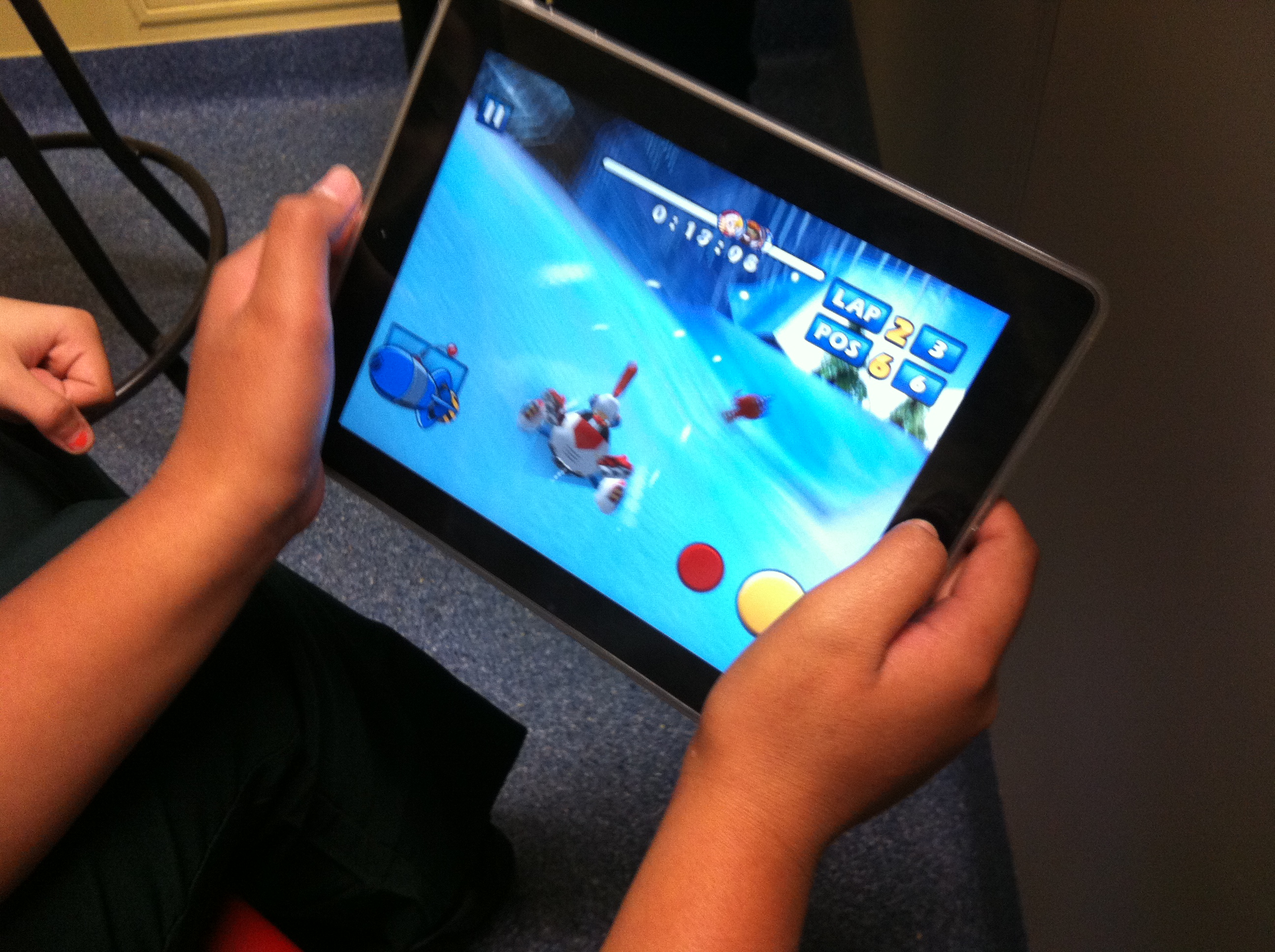
Many faculties at my school purchased iPads to be used as student devices this term. Our aim is to use these iPads in combination with the other ICT tools we have already (1:1 laptops, interactive whiteboards, flip cams, etc) to further move into 21st century leaning.

I am now in the process of organising teacher professional learning to make sure that teachers can maximise the learning benefits of these iPads. To do this I have been browsing through many blogs and websites that detail how others have done this. Many of these blogs and sites contain information like “102 ways to use your iPad in the classroom”. In the professional learning I have attended for iPads, they have also mainly focused on apps. Now that’s all well and good as teachers need to know what apps are out there, which apps have been tried by teachers and how they have used those apps in their classrooms. According to this article, there are four stages to teachers’ integration of technology in teaching learning:

Stage 1  – Preliterate end users – Teachers with minimal experience with the technology – The challenge here is to help these teachers see the benefits of technology in making their classroom instruction and administration easier

Stage 2 – Software technicians – Teachers who have used apps, software and/or the piece of technology for personal use

Stage 3 – Electronic traditionalists – Teachers proficient in using technology to extend traditional classroom instruction such as electronic worksheets and drill and practice quizzes

Stage 4 – Techno-constructivists – Teachers who utilises technology to allow students to construct their own understanding, create products and solve problems

At the moment I think I do stage 1, 2 and 3 quite well when I design professional learning for other teachers. However stage 4 is much trickier. How can I design professional learning that will help teachers on a journey to become techno-constructivists? It will require teachers to confront and reflect on their perspectives of how students learn, which are framed by many previous experiences and assumptions.

How would you approach this? Have you done this before? Share your ideas and thoughts 🙂

You don’t create groups on Edmodo. You create learning communities.

You don’t create groups on Edmodo, you create learning communities

I have been using Edmodo as an online learning tool for a little over 1.5 years now. Back at the beginning, I viewed Edmodo as an easy way to post content for my students online, for students to submit their work online and for me to send my students urgent important messages outside of school hours. The way I used it was very one way – teacher to student. The first Edmodo group I set up was for a Year 11 Physics class. When I analyse that page, almost every single post was made by me. Most of these posts have no replies. There were a small number of posts made by students, which were questions directed at me as a teacher and I answered them. This group wasn’t a learning community. It was just a website that had information posted by me.

This year I have been using Edmodo with my Year 7 Integrated Curriculum class, which I teach for English, Maths, Science, Geography and History. Our Edmodo group page looks very different to the year 11 page. Firstly there are heaps of posts, probably 5 times as many posts as the Year 11 Physics group. And most importantly, a significant number of those posts are made by students.

I went through the Year 7 Edmodo page and categorised all posts made in August 2012 and here are the stats:

  • There were 71 posts during this month
  • 46 out of 71 posts were by me
  • 25 out of 71 posts were by students
  • 62 out of these 71 posts involved a discussion
    • This means that these 62 posts had more than one reply comment. These reply comments included students commenting on each other’s work, answering each other’s questions or holding a discussion that was of interest to them
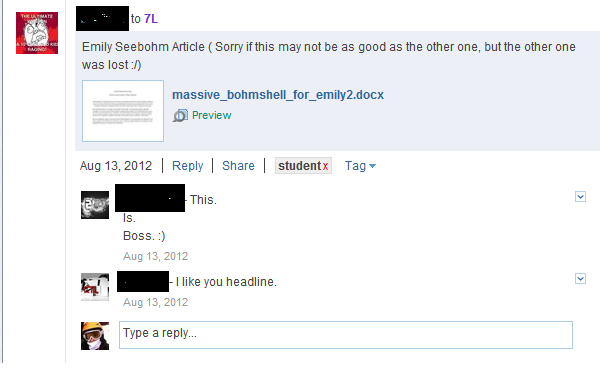
Students sharing and commenting on each other's work on Edmodo

Students sharing and commenting on each other’s work on Edmodo

Students sharing and commenting on each other's work on Edmodo

Students sharing and commenting on each other’s work on Edmodo

For me this year, Edmodo has transformed from a free alternative to a learning management system to a tool for enhancing a learning community. It is an online space that allows my students to learn from each other beyond the four walls of the classroom and beyond 9am to 3pm. The Year 7 Edmodo group is a much more dynamic and successful learning community than my previous Year 11 group. Why?

Just do a search in Google for creating a successful online learning community and most sites will give you very similar tips.

  • An online community is like a traditional community, built on shared qualities, characteristics and purpose.
  • A successful online learning community must create value for its members. The online community must be worthwhile for its members to visit regularly.
  • Individuals must be supported and empowered to share their knowledge, information and user-created content. A successful learning community must have a majority of members sharing ideas and content that is of value to that community.

So how did I ensure the above three features of the Year 7 Edmodo group this year?

Shared qualities, characteristics and purpose

Year 7s knew from the start of the year that the group was for them to share their learning. While they also post their homework on there too, one of the first things I did was to have them share a summary of a news item of their interest (most reported on NRL pre-season news) and reply to another student’s post with something they have learnt from that student’s posts. Questions asked by students were answered very quickly by me, which assured students that Edmodo was a worthy tool for communication. This set up a sense of shared purpose for the Edmodo group very early on.

Creating value

One of the ways of creating value in an online community is to allow users to personalise the space. For my Year 11 physics group, I gave them the Edmodo group code and went from there. I didn’t spend time to let them set up their profiles and change their profile pictures. For Year 7s we spent an hour setting up their Edmodo accounts, filling out their Edmodo profiles and choosing an avatar that most represented them. This was done in the second lesson of the school year. So straight away Year 7s was given an opportunity to value Edmodo; this opportunity was not given to Year 11s.

Support and empowerment

Year 7s often post things up that are not 100% related to our school work. Posts like personal art projects they have done, their successes in weekend sport, their views of internet censorship and the death of Niel Armstrong. I actually don’t know why my Year 7s feel empowered to share things they have created or news they think are worthy for their classmates to know on Edmodo. This started very early on in Term 1. Perhaps because their early activities on Edmodo was all to do with sharing their personal interest projects and news. Perhaps in our face to face classes we emphasise on sharing our learninh artefacts. Whatever the impetus is, I hope it stays there because it is one of the strongest driving forces of our learning community.

Note that the above features of successful online learning communities are all related to how people relate and interact with each other and how they emotionally connect with the online space. How come this is rarely discussed in professional dialogue associated with such online tools? I think teachers often do misjustice to educational social networking tools like Edmodo when we promote it to other teachers in professional learning or in conversation when all we talk about are how Edmodo allows students to complete self-marking quizzes. These are all excellent tools for learning but rarely are our conversations and professional learning about the dynamics of human relationships in such online environments. Yet it is these intricate dynamics of human relationships and interactions that would make or break an online learning community. Unless these are made explicit for teachers about to make the online learning journey, we are almost setting them up for failure. It doesn’t matter whether teachers are using Edmodo, Moodle or any other online learning community tool, we must talk about human relationships and interactions.

Learning with mobile phones

This sign is the type of sign that many schools have in relation to mobile phone use by students at school.

a sign showing mobile phones are banned

While mobile phones can cause distraction to students’ learning, they can also be a powerful learning tool, and I’m not talking about using educational apps or educational apps. Mobile phones can be an extremely powerful tool for students to demonstrate higher order thinking skills, which a colleague and I presented at the NSW Secondary Principal’s Council conference.

Mobile phones are a high quality camera

A lot of students now have a smart phone (iPhone, Android, Windows phone). These are also high quality cameras for still photos and video cameras. Never in the history of education can a teacher walk into a classroom and have almost a 1:1 ratio of high quality cameras at students’ fingertips to create learning artefacts.

As an example, my Year 7s were learning about magnetic forces last week. Typically such a lesson will involve a practical activity with bar magnets, followed by some comprehension questions. Instead of getting my year 7s to answer textbook-style questions to show that they understood magnetic forces (which they did for homework), they made a photostory to show what they have learnt. They had to take photos of their experiment and insert captions to show the properties of magnetic fields. They used their mobile phones to capture the photos and used Windows Live Movie Maker to create the photostory.

This teacher-led explanation, the practical activity and the creation of the photostory was completed in under 2 hours.The photostory isn’t intended to be a high end production. The photostory acts as a quick creation for students to show their understanding. One of the photostories is shown below. Minimal editing was involved and the photostory was used as a stimulus for a class discussion on magnetic forces.

What will your students do with their mobile phones?

Can you see the thousands of dollars?

My year 7 has had laptops now for a few weeks. The class received 12 laptops, which is a costly investment. A colleague once wisely said if that much money was spent you should be able to walk into a classroom/school and notice a difference. You should be able to visibly see that investment’s impact on student learning. So I asked myself exactly that question – Is the learning different in my classroom now? Is the learning better in my classroom now?

I’d like to say yes, and here’s my evidence:
-Students now use their laptops in small groups to demonstrate their understanding, often with higher order thinking skills. Today we explored the properties of magnets. Instead of doing the prac activity from the textbook and writing a prac report, students made a photo story to explain to other year 7s the magnetic properties they have discovered. This took 2 hours. Minimal editing was involved as I wanted the students to focus on the explanation of science, not on fancy video transitions.

-Laptops are used to differentiate learning. Year 7s have been learning about area of composite shapes and expressing area and perimeter through algebraic expressions. Students had to self assess whether they needed more practice in composite shapes or were ready to move onto algebra. Students who selected to refine their skills in composite shapes worked on a self-marking quiz on the laptops while the rest had small group instruction on algebra.

These are just 2 activities where laptops have enhanced learning. When you walk into my classroom, you can see, hear and feel those thousands of dollars making an impact.

Are your thousands of dollars of investments visibly making a difference?

20120821-222310.jpg

20120821-222357.jpg