The future of science education in Australia – there is an elephant is in the room and no one is looking

When I took on my first Year 11 physics class in 2007, I remember saying this to a colleague:

“I do so many things to make science interesting in Year 7-10. But when it comes to Year 11 and 12, it all goes out the window. It’s just about learning the dot points.”

I was reiterating what many senior science teachers feel – science in the senior years of high school is mostly about passing on content, making sure students can remember the content and pass the exam so they can get into the university course they want. (Note: I still do engaging activities with my senior students. I just have less time to do it)

This is one of the major findings in the report “The Status and Quality of Year 11 and 12 Science in Australian Schools”. The report indicated that science in the senior years of high school is mostly taught via the traditional transmission model, driven by the perception of teachers and students that the purpose of Year 11 and 12 science is to get them into university and prepare them for university. According to the report this has made the senior science curricular cramped with so much content that teachers don’t feel like they have enough time to integrate the social aspects of science and students feel they don’t have enough time to think about what they are learning. These quotes from students in the report sums up how students feel about science as they progress through high school:

“Science just got harder and harder … it went from like fun and exciting to like boring and numbers.”

“There is a major difference [between junior and senior science]. In junior they had to make it fun and interesting otherwise we just wouldn’t have done it.”


While the report pointed out that junior science is more about scientific literacy rather than just content, and allows more flexibility to make it more engaging, the report did indicate that the transmission model of teaching has filtered down to junior science in for some students, perhaps in order to prepare students for senior science.

Some other interesting points of the report are:

For students who don’t chose not to study science in year 11 and 12:

  • Many of these students like science and think learning about science is important
  • These students often had negative experiences in year 7 to 10 science, but still think science is important to learn
  • Some of these students have been counselled against studying science in year 11 and 12 because teachers and career advisers think it is too difficult for them and will not help their university entrance score

For students who do choose to study science in year 11 and 12:

  • The majority of these students indicate that the purpose of year 11  and 12 science is to get into a university course they want to apply for and/or meet prerequisite requirements set by universities
  • These students also think that science is enjoyable to learn

So the trends are showing that many students have an intrinsic interest in science and think it is important, but they are turned off from studying science.

The report made several recommendations including:

  • Setting a realistic amount of content in senior science courses so that the social aspects of science and science inquiry skills can be included
  • Making junior science more interesting by using an inquiry based approach where learning has authentic contexts and audiences

I wholly agree with the second recommendation. However it seems to me that the report in general appears to be avoiding the elephant in the room – that a summative, high stakes, university entrance exam is possibly driving pedagogy in year 11 and 12 science and unless that changes, it will continue to do so. The report findings such as an overcrowded curriculum, students copying notes from the board and a focus on memorisation, are typical teaching strategies that result from trying to maximise scores in high stakes exams.

The report overall asks this question: “Are we as a nation content that only half our senior secondary students are studying science?”


I would like to ask these questions instead:

  •  If year 11 and 12 science is to prepare students for university, when did universities say they wanted students who spend most of their time copying notes, memorising a lot of facts and not have enough time to think about what they are doing? How does this prepare them for university?


  •  Are we as nation content with our future scientists and innovators being prepared to solve the complex problems of the 21st century by being encouraged and rewarded for low level thinking?


  • If we reduce the amount of content in year 11 and 12 science would it have any impact on the way it is taught if there is still a high stakes university entrance exam?


Perhaps there should be a recommendation of getting rid of university entrance exams as they currently are and look at alternative models of university entry. Without the exam, students will be able to learn science for the love of science and not as a means to an end.

Taking a giant leap .. The first two years as an educational leader (Part 2 of reflections of 2011)

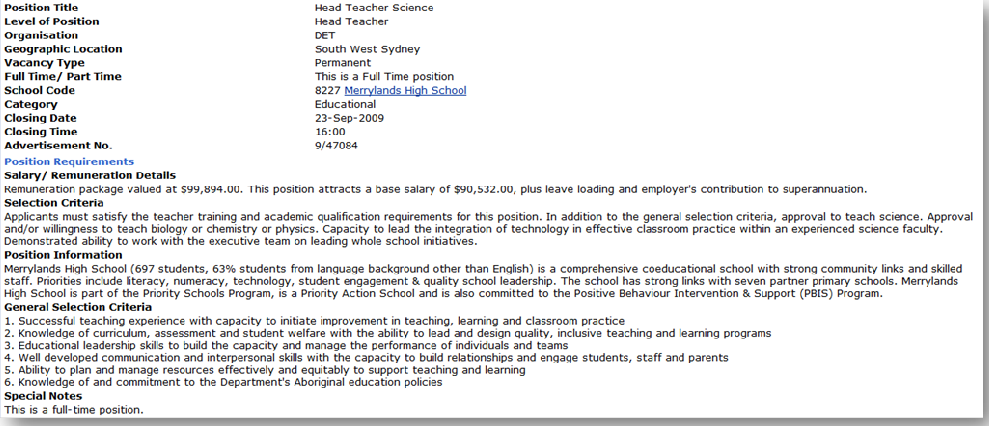
It was in September 2009 when I saw this advertisement.

advertisement for my current position


Back then, I was in my third year of teaching at my previous school. I had a really good group of Year 10 students who I wanted to take to Year 12 in Physics. I had established a really reputation at this school and had a really good working relationship with everyone so I was in no rush to leave.

My then Head Teacher encouraged me to apply so I thought I might give it a shot. It was part of my career plan anyway. So when I got the call to say I got the job, I did feel as if perhaps I wasn’t ready for it. I was 25 and had only taught for 3 years. I’d been Year Adviser for 1.5 years, was relieving Head Teacher Science for 10 weeks and relieving Head Teacher Welfare for 5 weeks.

So I basically jumped into the deep end. And for those who know me, that’s what I do usually anyway. I tend not to take baby steps. If I want to do something, I just do it. One of the things I regularly say is “This will turn out really good or really bad”, but the risk of it turning belly-up never stops me from trying.

In these past two years, I have definitely learnt the most and developed the most as a teacher and a leader. Here are some of the things I’ve learnt:

• There’s a difference between leadership and management, but you need to have both.
• There’s a difference between informing and engaging people.
• Teachers are learners too and each teacher has different needs. While it’s extremely important that everyone knows what the goals are, how they get there needs to be personalised.

multiple paths analogy

One of the biggest challenges comes from my main strength. Like I’ve said before I like taking risks in the way I teach. When I have an idea I run with it. This is a lot harder to replicate in a team situation. I have a fantastic team who is willing to give 110% in whatever we do.

At times it was like the crazy dancing guy analogy of leadership. My team is composed of brilliant teachers who have great rapport with students, but I found that in my first year as Head Teacher I was the one dancing crazily and they were watching me. I wanted them to dance crazily with me too.

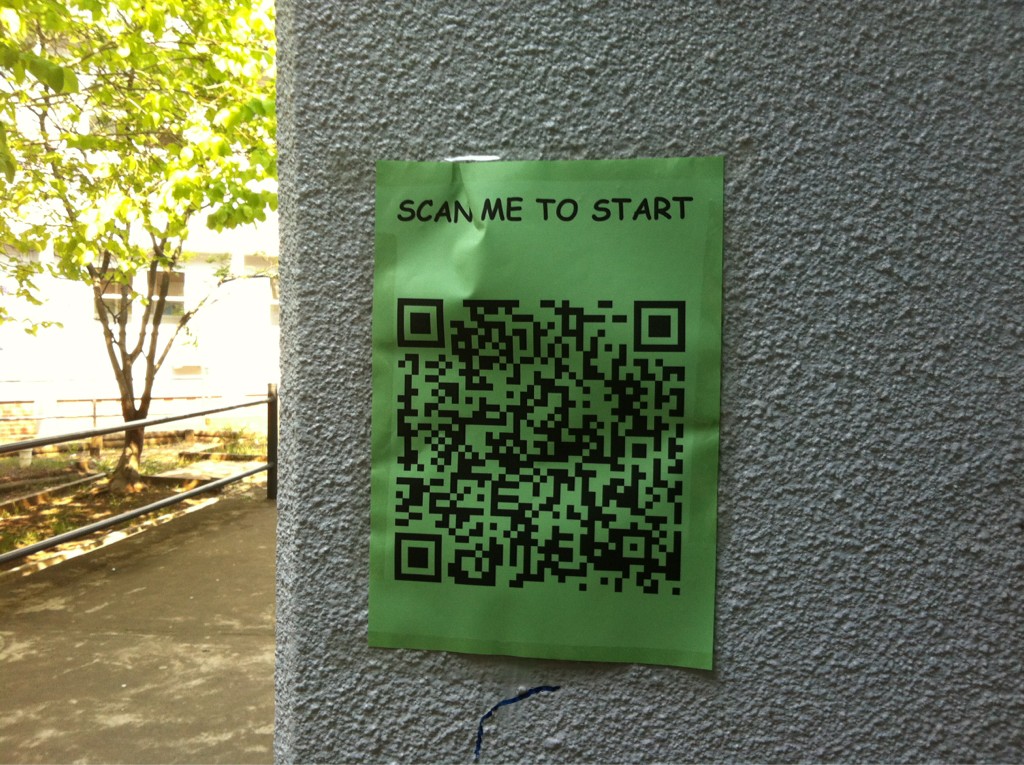
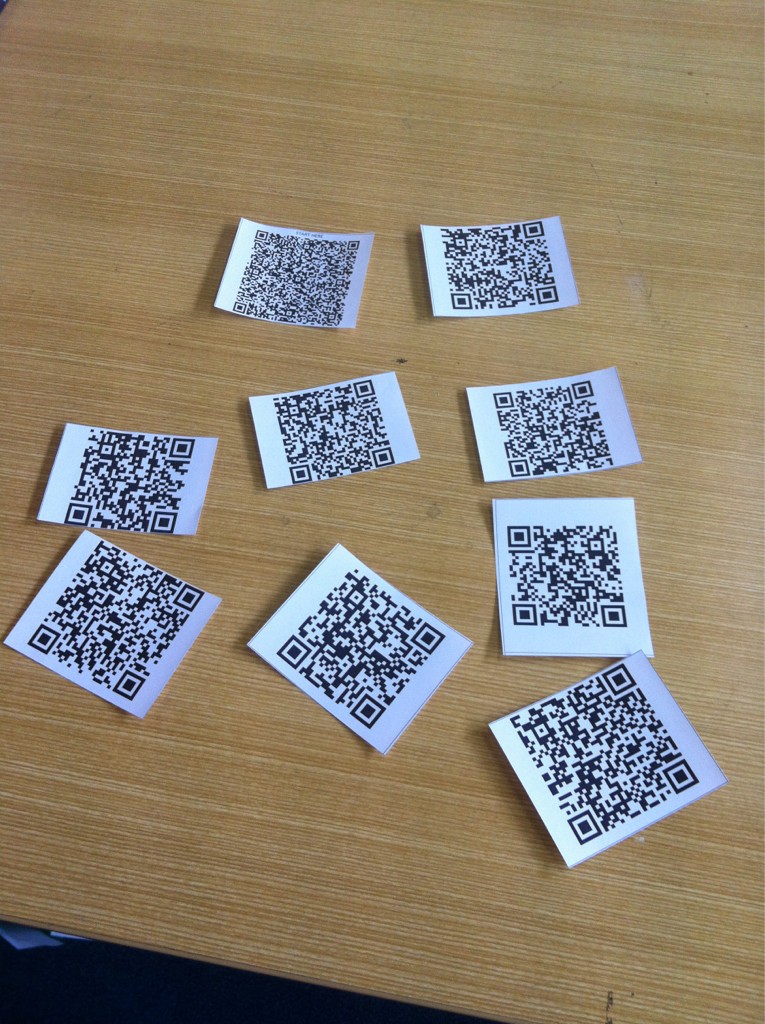
So I started to back up all the new strategies and tools I suggested with WHY. WHY should we take the plunge and try this? I also started doing activities in public spaces of the school like sticking QR codes all over the school and have my students running around the school with iPods to scan them. The noise and commotion of students learning would often catch teachers’ attention. They would then be curious and ask me questions of what I am doing and how they could do it with their classes. The QR code activity actually resulted in a teacher asking me how to make a QR code and he made one himself.

And like the crazy dancing guy analogy, I’ve been able to move my team forward this year because someone else has started dancing crazily with me. This colleague has flourished since I introduced him to Twitter (you can follow him at @HenryYavuz). His teaching repertoire has expanded massively and he is now taking risks with his teaching. And the rest of the team is now getting up and dancing too. Without the first person getting up and taking the plunge to dance crazily I wouldn’t have been able to create and start to implement a new unit of work next year that transforms how the faculty approaches pedagogy.

I’m really proud of the achievements of my team and the achievements of individual teachers in the team. I’m really looking forward to 2012. I’m hoping for lots of crazy dancing.

The first five years of teaching … (Part 1 of reflections of 2011)

There are milestones in teaching. The first, most obvious milestone is the getting through the first year of teaching. The next milestone is getting through your first five years of teaching. As more and more research shows, five years is the time when a large number of teachers choose to leave the profession (25% to 40%).

There is a global shortage of teachers. There are newspaper reports after newspaper reports about the looming massive retirement of the teaching force and the need to recruit more teachers. However, there are signs that it is just as important to work out what is keeping teachers in the profession because a lot of teachers leave within five years. There is no educational benefit to students of recruiting lots of teachers just to have them leave within five years.

Well, this is my fifth year of teaching and I have no plans of leaving the profession. There are numerous articles (eg. Sydney Morning HeardThe AgeThe Herald Sun) that tell you why teachers are leaving. But I’m going to go through why I choose to stay:

  • I love my job. Yes, teaching is stressful. Yes, teaching is hard work. Yes, teaching involves long hours. Yes, teaching means you never stop working (this could just be me not knowing how to switch off). But I don’t mind because I honestly love what I do.
  • I had a fantastic teacher mentor, head teacher and principal in my first school. We had a teacher mentor who didn’t have a teaching load. She was an experienced teacher who had a wide range of teaching repertoire, who just mentored us. She’d come into the classroom to team teach and was always there when you needed support. She wasn’t there to “judge”. She gathered all the beginning teachers at our school together every fortnight so we can share our positive and not-so-positive experiences in the classroom. If it wasn’t for her, my attitude and enthusiasm for teaching would’ve probably been very different.
  • I had a fantastic colleague, who was also a beginning teacher, when I first started. We shared resources and supported each other through the good times and the bad times. I continue to have fantastic colleagues who work together as a team and share our resources and ideas with the aim of enhancing of our students.
  • I was provided with leadership opportunities very early on in my teaching career. Both my head teacher and principal actively encouraged me to take on leadership opportunism. My current principal and school executive continues to do so.
  • When I had an idea that would benefit student learning, I was allowed to run with it. The school leadership at all the schools I’ve worked at, were very supportive. This is particularly true at my current school,
  • I do other things while I am teaching. I have done a range of freelance work with UNSW and UTS, mostly in the school holidays. While this was hard work at times, it provided me opportunities to work with people who in industries outside the high school system. This offered me something different to work with.

I hope that all beginning teachers have the same positive experiences I’ve had. Or perhaps I’ve just been lucky?

Part 2 of my reflections of 2011 will be on my journey as an educational leader. Watch this space.

It’s more than just a game

For the past 5 months I’ve been coordinating a team of 10 students to design a mobile geolocation game for mobile devices. The game is built on Aris and is designed for Year 6 Orientation Day. The team of 10 students consisted of students in years 9, 10 and 11 (15 to 17 year olds) who were part of a student-led technology team.

The team was divided into students taking on different roles. Two students were the main programmers in Aris, three students were narrative writers for the game and five students were media collectors and collected images and photos for the game. The narrative writers came up with the following as the main narrative that ran through the game:

My older sibling just left MHS and apparently he left me notes around the school for me to use to get around the school without any trouble. Now all I need to do is find the notes.

My older sibling’s friends said that these notes are crucial for me to find my way around the school; so therefore I won’t get in trouble from any teachers for being late to class.

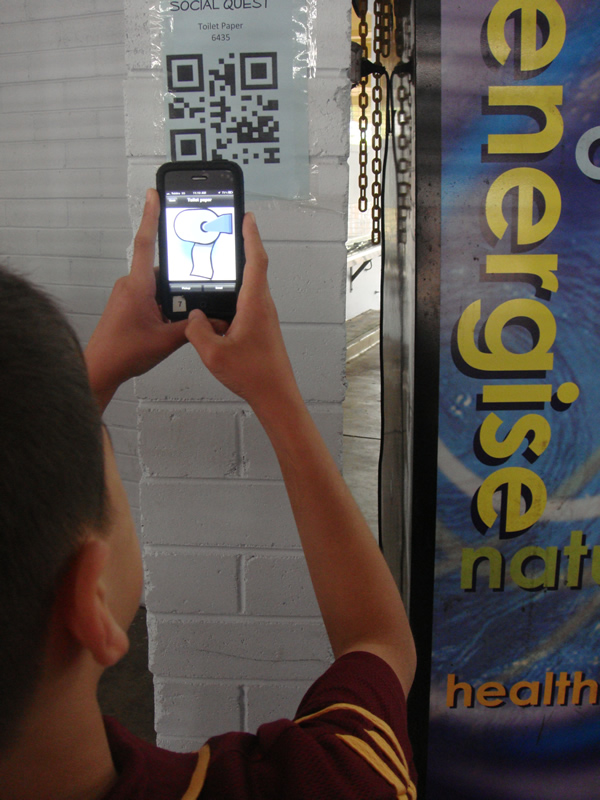
The team designed seven quests based on this storyline. All quests related to major landmarks of the school that Year 6s would need to know when they enter high school. Each quest contains four items that students collect by scanning QR codes. After they have collected all the items for a quest, they go to the school’s assembly area to “exchange” their items with a quest “guardian”, who gives them a badge. Students need to collect all seven badges to receive a medallion and win the game. Here are some of the quests’ storylines:

SOCIAL QUEST

The bell has gone for recess.

The first thing you need to do is to visit the toilets. Visit both the boys and girls toilets. Then find the toilet and collect toilet paper code. Find the toilet and collect soap code. Then head towards the canteen. This place is where you buy food for recess or lunch. There are also seating areas. Near the windows you will find a food code. Go and eat on the Quad and then put your rubbish in the bin. Go to the podium where the assembly takes place, to scan the appropriate guardian to receive your badge.

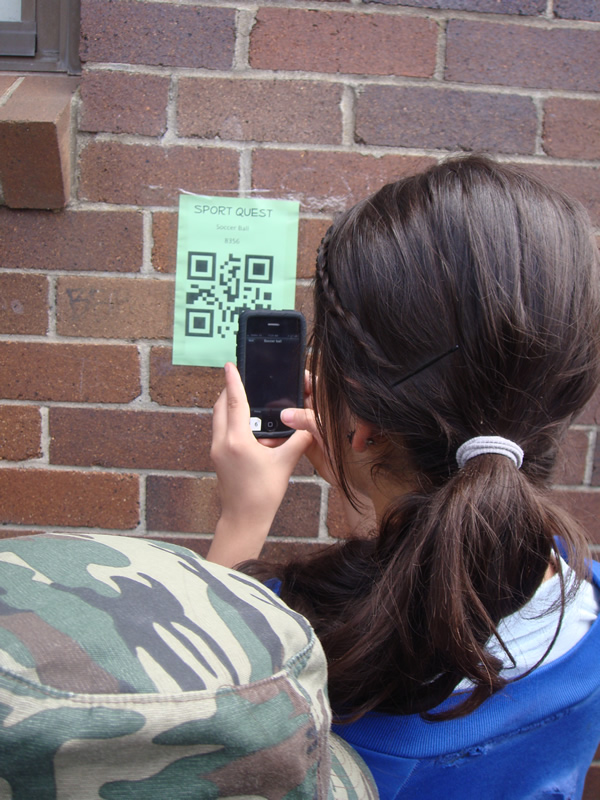
SPORT QUEST

The bell rings for your next class. You stare at your timetable and notice that you have PE prac. You are unsure of where to go. You see a bunch of people going towards the back end of the school and you ask one of them where is the PE meeting area, They tell you the PE meeting area is just there where all the silver seats are at the back of the school. Go to the silver seats and you should find a basketball code.

After you meet your PE teacher, you need to change into your sports uniform. Go to the change rooms behind the hall to find the sneakers code. After you get changed, go to the hall and find the hockey stick code. Then go to the fields to find the soccer code. Finally go to the podium where assembly takes place, to scan the appropriate guardian to receive your badge.

The game was a success! There were some initial glitches that the students fixed during the day.

iphones with the game on the screen

The orientation game on iPhones

student scanning QR code

Year 6 student scanning a QR code to collect an item for the game

student scanning QR code

Another Year 6 student scanning a QR code to collect an item for the game

student coordinating iphones for the game

A student running the show by setting up all the iPhones before another session with Year 6s

For me, this experience is much more than making a game and playing a game on iPhones. Watching the students create the game has shown me how much young people can thrive when given a challenging task in a stimulating environment. Something that traditional classroom experiences can’t offer.

The students created the game from scratch, after a very brief training session with Macquarie ICT Innovations (MacICT). The students met face to face for 50 minutes a week and a lot of work was done outside of this time. Each student had a defined role in the team (programmer, narrative writer or media collector) and they had to constantly communicate with each other (face-to-face and on Edmodo) and complete their tasks according to a timeline, which was created by the students. There were times when one team could not continue their work because another team has not uploaded their work. In the beginning, I was the one that ensured students worked to the timeline, but overtime another student took on a leadership role and began coordinating the team. In the end, I had almost no input in the game and the students did it all themselves. It was fantastic!

students working together on Edmodo

An example of student leadership and the development of project management skills

From making this game, the students applied their literacy skills, team work skills, project management skills and problem solving skills. The way the students worked also reflected how adults worked in real-life in many businesses. Our face-to-face sessions began with each team stating where they were up to and the whole team uploading what their goals were for the session. Each team would then go off to do what they had to do. Some students stayed in the room to program the game or write narratives. Other students went around the school taking photos. Within the narrative writing team, all students wrote the narratives for the game and one student took the role of editor and made sure there were no spelling or grammatical mistakes. Based on the narrative, the media team created images or took photos. These were then passed onto the programmers who put everything together.

The testing phase of the game involved a lot of debugging. The game initially had lots of glitches and the team had to critically analyse which parts of the game were causing the glitches and how to fix them. This involved a lot of problem-solving skills where students had to undergo processes to isolate which component of the game that caused the glitch.

So after 5 months, the students succeeded in making the game. They created a game almost all by themselves with minimal help from teachers and developed some critical skills that they can carry through beyond their school years. Young people can rise up to the challenge and do amazing things! I am so proud of them.

And thanks to MacICT for lending us the iPhones and their support throughout the game design process.

Energy: Our Future

I’m making this post because I’m super-excited about this. For the past 6 hours, my colleague (Twitter: @HenryYavuz) and I have been re-thinking our approach to Year 9 Science. We want to make it more relevant and engaging for the students. We want students to realise they can make an impact on the world and change it!

In the past Term 1 involved students learning about atoms, electricity and nuclear energy. Atoms involved just teaching about atoms and the periodic table and the topic lacked context. Electricity and nuclear energy are OK but they don’t allow much scope for students to connect their learning to audiences outside the classroom. So we came up with the idea of using the looming energy crisis as the main theme for the topic, a problem that our Year 9s will face as adults.

Students will work in teams to act as advisors to make recommendations for Australia’s future in energy. They will need to investigate the social, economical, scientific, environmental and legal implications of coal energy, nuclear energy, solar energy, wind energy and biomass in order to recommend whether Australia should:

  • Continue with coal powered stations
  • Adopt nuclear energy
  • Expand on solar energy
  • Expand on wind energy
  • Expand on biomass
  • A combination of any or all of the above

They will present a written report to persuade the adoption of their recommendation. They will also need to make a presentation on their recommendation to a (mock) panel of government reps.

To ensure students will be successful in this task, we have set up mini tasks that will act as learning artefacts for students to demonstrate their understanding and provide the scope for regular feedback. These mini tasks will be uploaded to their electronic portfolio (a blog). The mini tasks are:

  • A timeline of how energy sources and use have changed overtime
  • Using a model of the atom to explain how electricity works and describe the benefits and limitations of models
  • A summary of the social, economical, legal, scientific, etc pros and cons of different types of energy
  • An exposition of whether radioactive waste should be moved from Hunters Hill to the Auburn-Lidcombe LGA

Students will also be uploading a learning journal and other learning artefacts onto their blog. Each group will be assigned a “buddy group” so they can comment on each other’s blogs.

So far this is what we got. We’ve started to nut out the learning sequence.

What do you think of it so far? If you were a 14 year old, would you find this engaging and meaningful? Are we trying to do too much?

Feedback is welcome 🙂

Rocking with QR codes

I’m teaching Year 7s about rocks and their origins at the moment, which includes learning about the origins of sedimentary, metamorphic and igneous rocks. Sedimentary rocks are rocks made from the bits of other rocks. Sedimentary rocks are the ones you usually find. Metamorphic rocks are rocks that have been exposed to so much heat and pressure underground that they have changed. Igneous rocks are rocks formed by volcanic activity.

The usual way to teach this is to whack up a picture of the rock cycle, point to it and just tell students where each type of rocks come from. The teacher might bring out some samples of rocks – basalt, granite, sandstone, slate. Students look at it for 5 seconds and lose interest. No one really feels connected to the experience. This is not only boring, but most students don’t remember it. So I thought I might do it different this time.

picture of rock cycle rock samples

I’ve been mucking around with QR codes for a little while now with a previous rock quiz and a geolocation game using the Aris platform. I came to the conclusion that if I want my students to know where different rocks come from, I want them to experience it and interact with the rocks in a way beyond looking at samples of rocks in the classroom.

So I decided to make a rock hunt. There’s a small courtyard near my classroom. I used Block Poster to make a gigantic image of a volcano and printed a gigantic “underground” sign. I pasted these images on the walls surrounding the courtyard and scattered different types of igneous rocks near the volcano, various metaphoric rocks near the underground sign and placed a bunch of sedimentary rocks around the place. Each rock had a QR code attached to it. When students scanned the QR code with their iPods, the rock’s name would come up. They would then need to work out whether the rock is sedimentary, metamorphic or igneous based on the location that they found the rock in.

image of giant volcano

QR code for students to practise scanning

QR codes for rocks

The rock hunt was a success, because students were able to produce a descriptive report on the three types of rocks after the rock hunt (most of them did so independently as well). I think the QR code rock hunt also allowed them to physically interact with the rocks in a simulated environment that mimicked where the rocks would normally be found.

The next time I do this activity, I would not only have the rock’s names on the QR codes. I would link the QR code of each rock to a short video about the rock. That way, not only are students interacting with the rocks, they’d be able to connect a classroom activity easily with digital resources.

And as a bonus, other teachers saw the QR codes and jumped onto free online QR code generators to try making their own.

Write down everything you know … NOW

exam rooom

In the past few weeks the following things have happened that have annoyed me and made me reflect:

  • I completed an exam for my uni subject as part of my postgraduate studies
  • Year 10 students completed their School Certificate exams
  • Year 7 and 9 students completing yearly exams

For those who follow me on Twitter, they all know too well my opposition towards completing an exam for uni. The exam was for a subject called “Social networking and online communities”, and the exam consisted of multiple choice questions, short answer questions and one essay question. The subject was to teach us how to build and sustain a successful online community whose members share and collaboratively create knowledge. In my tweets and my uni forum posts, I complained how this end-of-semester test did nothing but assess our ability to memorise and regurgitate information. The test didn’t actually test my understanding of online communities or my ability to create and sustain online communities. For example I memorised that ethnography involved participant observation, but I have no idea what this means. However, I was able to memorise it and regurgitate it in the exam, so I got a mark for it. While the content of the uni course was actually quite interesting, studying for the exam ruined the learning experience.

Meanwhile, in my last lesson with my Year 10 class before the School Certificate exams, one student asked, “Do we have science after the School Certificate?” I said yes. This student replied “But what’s the point?”

That really upset me. This student saw the purpose of our science lessons as a way for her to pass a test. After the test, learning doesn’t matter. School is supposed to be a place where we nurture the curiosity of young people. School is supposed to be a place where students want to learn. School isn’t supposed to be somewhere you went to pass an exam and then somehow become “free”. What school has become though for many of our students is a place where they cram in as many facts as they can, spill it out in an exam and forget it as soon as they leave the exam room. And what for? So they can get a piece of paper at the end. As a uni student, I hated being treated this way. Besides educational institutions, where else would insist on someone writing answers as fast as they can in a set time frame as an accurate way of finding out what someone knows and can do? It’s not like you get the exam back either. All you get is a piece of paper with a grade and/or a number. You have no idea of which areas you are good at and which areas you can improve on (and how).

So why do schools do it? Why do we as teachers insist on exams?

I’m not saying that tests don’t have their place in education. Regular tests can give lots of useful information to students and teachers, but why can’t we have other assessments that hold the same value in the community as exams. Why can’t we use portfolios, interviews or collaborative assignments that are weighted the same as exams? There must be better alternatives than sitting our students in a hall and telling them “write down everything you know now … you have two hours”. With less emphasis on exams, students would probably enjoy learning at school a lot more. Isn’t that what school is for?

My Spore Journey – digging deeper into GBL

Today was my last Year 10 Science lesson. We have been learning about evolution for the last four weeks. Over the four weeks, my class worked in groups to play the game, Spore, while learning about the scientific perspectives of evolution. The aim was to allow them to play Spore and evaluate the scientific accuracy of the game (for more information, see my previous post). Due to the time pressures of the looming high-stakes exam known as the School Certificate, the class only played the cell phase, with some groups playing the start of the creature phase. This still allowed all students to get a fair idea of how the game functioned in terms of evolution. Students also completed simulations that promoted scientific perspectives of evolution so they can critique Spore.

From classroom observations, students enjoyed the game. They asked whether it was their group’s turn to play the game at the start of each lesson and genuinely enjoyed playing the game. While we didn’t have time for the class to create a product to review the scientific accuracy of the game, we had a lengthy discussion on the topic. I displayed the evolution of one group’s spore creature and had the class discuss how the creature had changed overtime and how environmental changes can be inferred from the changes in the creature. This was similar to how environmental changes can be inferred from the fossil record.

evolution of a spore creature

We then compared the similarities and differences of evolution according to scientific perspectives and evolution in Spore. We compared the game’s version and the scientific version of how life originated, how changes came about in organisms and whether organisms evolved to “suit” the environment. The last two points were the most important as Spore purports two common misconceptions of evolution – (1) That changes in a species were for a purpose and (2) That organisms grew to adapt to their environment. In contrast evolution from a scientific perspective is random. There is no purpose to evolution and organisms do not evolve to become suited to their environment. Instead characteristics that might be useful to a changed environment come about randomly through mutations and the organisms with these mutations are just lucky that they end up being useful when the environment changes.  The two misconceptions that Spore purports are more aligned with intelligent design.

After the discussion, students were asked to post their understanding of the scientific version of evolution onto Edmodo. From their posts, they appear to grasp most of the aspects of evolution:

“Natural selection is the mechanism of evolution. Natural selection involves a group of organisms with favourable charactistics to be able to survive in an environment better than those who do not have these characteristics. This is called adaptation. The organisms that are able to adapt to the environment will successfully pass on their gene and over time many organisms within that group will inherit the same gene.”

“Natural selection is the mechanism of evolution where organisms with a certain characteristic are more likely to survive in the environment. The organisms with this characteristic survive while the other organisms without the characteristic die out. The organisms that survived will pass on this characteristic to their offspring and over time, more and more of those organisms will have that adaptation.”

However, what was more interesting was the students’ apparent perceptions of using Spore in class. From the class discussion it was clear that there were two groups of students. One group treated the game as a serious learning resource and were analysing the game for its scientific accuracy of evolution. The other group dismissed the game as a learning resource and thought using a game as a stimulus for learning about evolution was a joke. This group of students held a very traditional view of what school learning is. They were also the same students who thought 1:1 laptops did not enhance their learning because they thought they learnt better from copying notes (see previous post for more info).

Just like there is research to say that the successful use of technology in education is largely due to a teacher’s perception of learning and teaching, I think the same applies to some extent to our students. Some of our students hold very traditional views of learning and teaching. They believe that they learn by the teacher telling them what to know and what to do. Copying notes from the board, answering comprehension questions and memorising facts allow them to be very successful at the current schooling system. Just like some teachers, these students are comfortable with traditional, transmissive modes of learning and exams tell them they are good at it. I’m not the first person who have thought of this. In my prac teaching back in 2006, my supervising teacher took over a class from a teacher who who taught by the transmission model. My supervising teacher had a very constructivist approach to her teaching and had her students work things out for themselves through a series of self-discovery activities that ran every week. She said she experienced a lot of student cynicism at the start, where groups of students told her that this wasn’t how they learnt.

It will be interesting to find out how students’ perceptions of learning and teaching affect their learning in a classroom that is structured in non-traditional ways. I’m planning to do an evaluation of using Spore and other games in learning activities when the class completes the School Certificate exams to see whether there is a correlation between students’ perception of what learning looks like at school and their attitudes towards games based learning. Suggestions of survey questions or focus group questions are welcome

Using cake to model the Earth

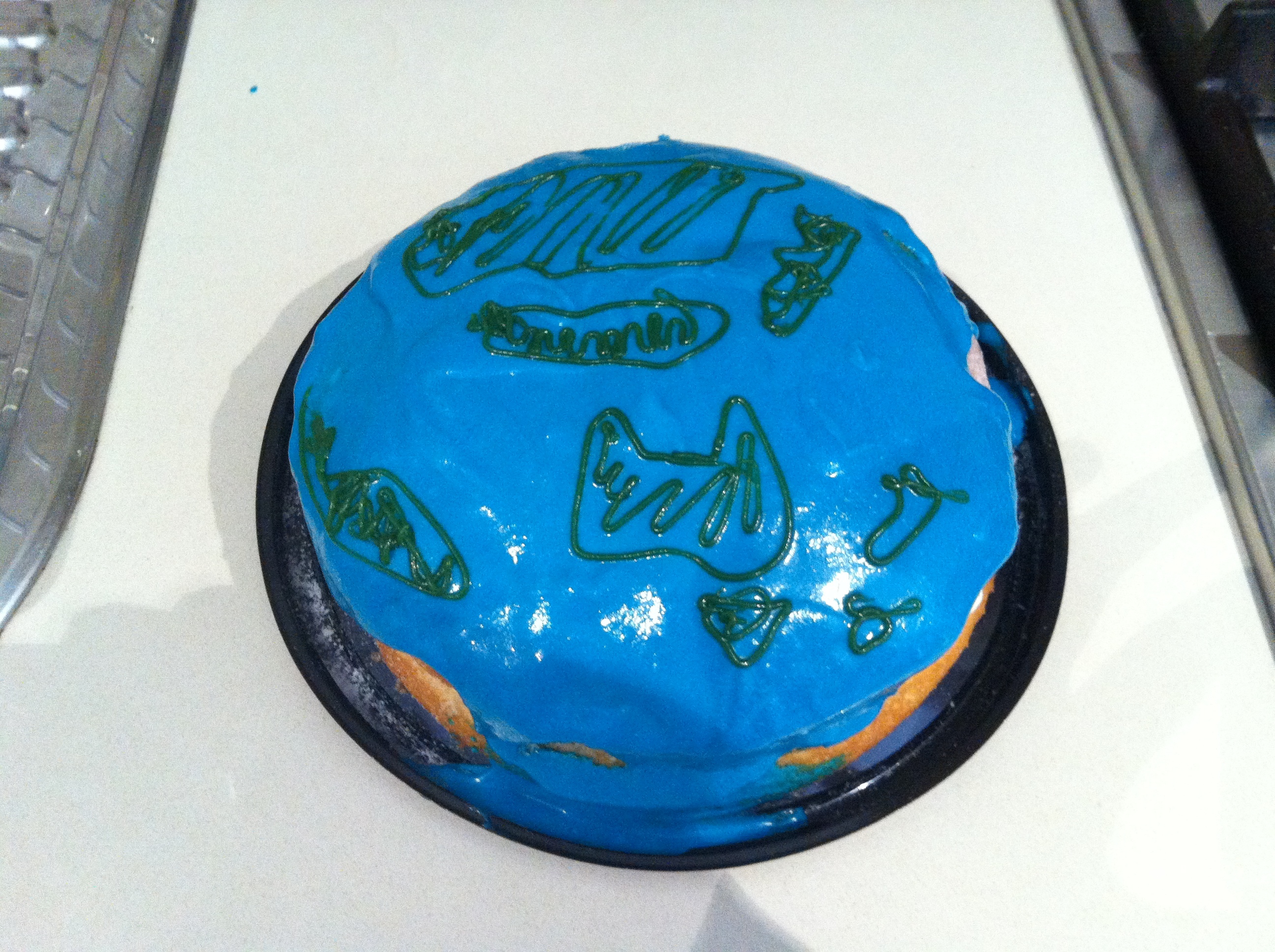
Today I used a jam and cream sponge cake for my students to learn the benefits and limitations of models.

It was a store-bought cake from Coles. I made some vanilla icing with added blue food colouring and spread it on top of the cake. I then used icing writing pens to draw the continents.

Year 7 students compared the cake to the structure of the Earth. They came up with some benefits of models such as making it easier to visualise things that are difficult to imagine. They also came up with limitations such as the cake not being spherical, not showing molten rock in the mantle and not showing the temperature changes of inside the Earth.

And we also got to eat cake at the end.

20111024-213118.jpg

Level up! Games, resilience & innovation

I have just returned from a five-day trip to Adelaide where I attended the Global Emerging Leaders Summit (GELS) and the Australian Council for Educational Leaders conference. The overall arching theme was “change” and “innovation”. One thing that really stuck out at me from both conferences was the need for resilience. Students need to be resilient in order to be innovative in a rapidly-changing world. To order to innovate, you need to be able to fail, fail multiple times, and get back up to reflect and improve. In one of the conference sessions, the principal from North Sydney Girls High School spoke about how her school was developing students’ resilience as a foundation for them to think outside the square.

But what about the teachers and their resilience? In GELS there was lots of talk about many teachers being skeptical about change; that they don’t want to prototype or try anything new when clearly what they are currently doing is not working or is contrary to research on best practice. While it is important to build students’ resilience, I think it is equally as important to build teachers’ resilience.  I think every teacher has had this experience – they come up with a brilliant lesson or activity to engage their students and improve their learning, but when they implement it, it just doesn’t go right. Sometimes it even fails dismally. I have had this many, many times. But I look back at the reasons why it failed, tweak the idea and try again. Many teachers do this, but  many teachers would simply give up and go back to their previous way. Some teachers not only give up but become increasingly cynical towards new ideas.

So how can we make teachers more resilient in order to lead to innovation? I think games based learning will have a role to play here, for students and teachers. No one is ever successful at a game the first time they play. And no one gives up on a game the first time they fail. (Yes people do rage quit, but that is usually after many attempts.). When you die in a game, you re-start and try again. Most of the time you work out what killed you the previous time so you won’t do that again and try something different. Most of the time you work out patterns in things like how the enemies come out at you so you devise more efficient ways of wiping them out. Imagine what our schools and classrooms would be like if all students and teachers did this? There is research that shows playing games can build resilience of improve “self-concept”. Susan Main and John O’Rourke showed that when students used hand-held console games to learn maths, their confidence in themselves increased and their achievements increased, signficantly more than the control group of students who did not use games. (This article is in the Australian Journal of Teacher Education, vol 36 (2), pp. 42-55)

So video games build your resilience, but it is unrealistic to expect a student or teacher to play a game and suddenly become resilient all other aspects of their lives. We need to look at elements of video games that build players’ resilience. I think there are three key elements.

Element 1 –  You have a guide

In games this is usually a fairy, a dog, some sort of partner like a fellow detective, or a third-person voice that speaks to you. This guide doesn’t know everything, but they are there to give you hints and suggestions when you feel stuck. And that’s why you try different things to pass a level. A good example of this is the fairy Navi in the Legend of Zelda series.

navi and link from legend of zelda

Element 2 – A supportive community

When the fairy in the game doesn’t give you anything useful and you’re still stuck, you jump on the internet to ask other gamers. The gaming community is a supportive network that would tell you what you’ve done wrong and give you suggestions to improve.

Element 3 – Setting you up for success

red mushroom power up  star power up

Games place strategic “power-ups” and objects to make sure you can be successful in your quest. Games do not set up for players to fail. Games make sure you can work out how to win. This can be placing extra “health packs” in a space just before you go fight a boss, or the game reminding you that perhaps it’s a good idea to visit the markets to stock up on health supplies before embarking on your next quest.  The Child and Youth Health website actually makes an analogy between video games and resilience, citing that you need “power-ups” to keep you going in life when you face obstacles.

Teachers and students need these three elements in gaming to be replicated in their real worlds. We all need a Navi to guide us. We all need a supportive community like an online professional learning network where we can share our expertise but also ask for guidance from others. We also need power-ups (resources, leadership, etc) to make sure we are set up to succeed.

So grab your Xbox, Playstation and Wii and play something as the first step. Imagine how innovative and engaging our classrooms can be …