I’m teaching Year 7s about rocks and their origins at the moment, which includes learning about the origins of sedimentary, metamorphic and igneous rocks. Sedimentary rocks are rocks made from the bits of other rocks. Sedimentary rocks are the ones you usually find. Metamorphic rocks are rocks that have been exposed to so much heat and pressure underground that they have changed. Igneous rocks are rocks formed by volcanic activity.
The usual way to teach this is to whack up a picture of the rock cycle, point to it and just tell students where each type of rocks come from. The teacher might bring out some samples of rocks – basalt, granite, sandstone, slate. Students look at it for 5 seconds and lose interest. No one really feels connected to the experience. This is not only boring, but most students don’t remember it. So I thought I might do it different this time.


I’ve been mucking around with QR codes for a little while now with a previous rock quiz and a geolocation game using the Aris platform. I came to the conclusion that if I want my students to know where different rocks come from, I want them to experience it and interact with the rocks in a way beyond looking at samples of rocks in the classroom.
So I decided to make a rock hunt. There’s a small courtyard near my classroom. I used Block Poster to make a gigantic image of a volcano and printed a gigantic “underground” sign. I pasted these images on the walls surrounding the courtyard and scattered different types of igneous rocks near the volcano, various metaphoric rocks near the underground sign and placed a bunch of sedimentary rocks around the place. Each rock had a QR code attached to it. When students scanned the QR code with their iPods, the rock’s name would come up. They would then need to work out whether the rock is sedimentary, metamorphic or igneous based on the location that they found the rock in.

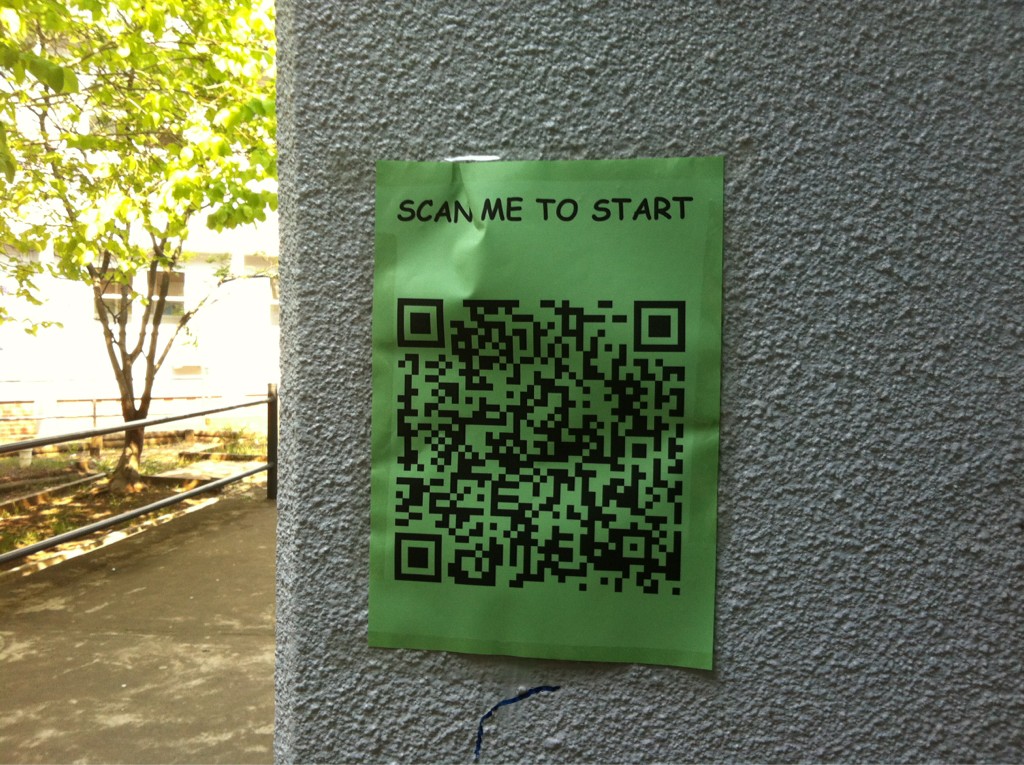
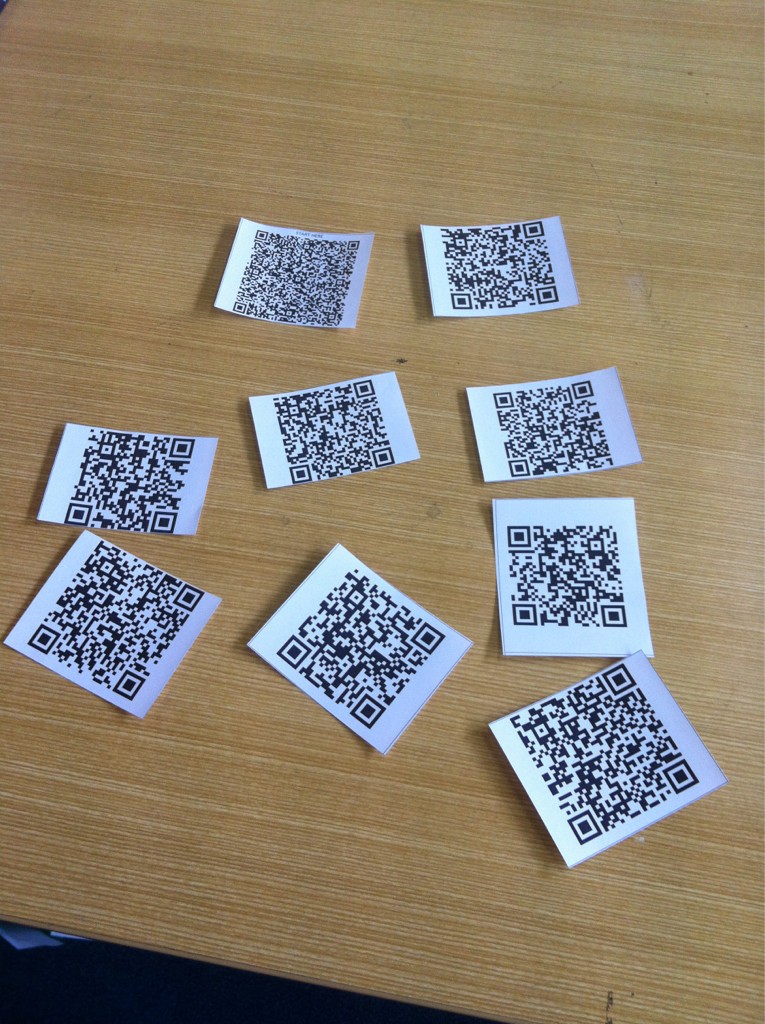
The rock hunt was a success, because students were able to produce a descriptive report on the three types of rocks after the rock hunt (most of them did so independently as well). I think the QR code rock hunt also allowed them to physically interact with the rocks in a simulated environment that mimicked where the rocks would normally be found.
The next time I do this activity, I would not only have the rock’s names on the QR codes. I would link the QR code of each rock to a short video about the rock. That way, not only are students interacting with the rocks, they’d be able to connect a classroom activity easily with digital resources.
And as a bonus, other teachers saw the QR codes and jumped onto free online QR code generators to try making their own.