Using technology to enhance the learning of scientific language

I have always found teaching the separations topic in year 7 science difficult. This is the topic where students learn a range of separation techniques like sieving, filtering, evaporation and distillation. Students have to be able to explain how this separation techniques work based on the physical and chemical properties of substances, which at times involve them having a good understanding of particle and atomic theory. One barrier to this topic is the large amounts of scientific technical language. Students have to know the definitions of these words and know how to use them in their scientific explanations – solution, suspension, solute, solvent, dissolve, soluble, insoluble. These words are just a small proportion of the entire list of terms students are expected to learn.

So with my Year 7s this year I decided to test out how online tools can help make the learning of these words easier and more effective for students. Previously I’ll use a lot of literacy strategies like barrier games, spelling games and concentration games to give students lots of practice at using the words. This year I decided to do it a little bit different. Here’s what I did.

1)      Introduce the need to separate mixtures in the context of obtaining clean, drinking water by using an adaptation of the river story.

2)      Students played a game to learn the definitions of solution, suspension, solute and solvent using Student Response Network. These PowerPoint slides were used to play the game:

3)      Students then performed an experiment to have hands on experience on solutes, solvents, suspensions and solutions.

4) Students then used a science dictionary to construct a table of terms and definitions.

Excel illustrated science dictionary

4)      Students worked in groups using the table of terms and definitions to create multiple choice questions for each term via testmoz.com. Each group uploaded their quiz for the rest of the class to complete. I chose testmoz.com because it is easy to use for Year 7s, doesn’t require registration of any sign up and it gives students a URL to share their quiz with others.

I found that this sequence of activities exposed students to these terms multiple times without being too repetitive. In their weekly tests, this group of year 7s have grasped the definitions of these terms and are able to use them in a scientific context more readily than other groups of year 7 classes I have taught previously.

Learning from failure

My Year 7s had a go at designing their own experiments this week.  Year 7s were designing experiments to compare their reaction times. As an introductory activity, we did the classic ruler reaction time test, where students had to catch a falling ruler as fast as they can.

They then worked in groups to design an experiment to compare the reaction times of two groups of people. They had a choice of comparing the reaction times between teachers and students, students who play sports often and students who did not; or boys and girls.

For some reason, all groups except one decided to do experiments that had nothing to do with the ruler reaction test. These groups had variations of a method of throwing balls at test subjects without warning and counting how many times the each person catches and misses the ball. Their method designs were quiet creative but very complex and required very efficient team work. And this class does not have the team work skills to pull it off.

I knew that some students will fight to be the leader of the group; some students will not listen to the instructions from other students; and other groups do not have a common understanding of the method amongst all group members that it will result in the experiment falling apart. Now usually I will say no to the experiment design. I would force them to go back and re-design their experiment. I might even force them to do the ruler experiment instead. I would explain to them that they need to choose a leader in their group and have roles assigned to each group member. I would go to lengths to avoid the potential chaos that was about to happen.

But this time I didn’t do it.  And yes, chaos followed and all my predictions were correct. There were groups where multiple students were giving instructions so overall no one knew what to do. One group had one student becoming extremely frustrated, yelling “No one is listening to me!”

So yes, the experiment was a failure. A lot of students went back to the classroom feeling defeated. They knew they have failed to achieve their goal. They don’t like to fail.

But that was what I wanted them to do – fail. I knew they had lousy team work skills. However, instead of me lecturing them on the importance of effective team work before they headed off to do their experiment, they experienced first-hand what ineffective team work feels like. When we returned to the classroom, we had a debrief activity where students identified what went wrong and what they would do next time. The effective team work elements came from them rather than me. We also discussed the emotions associated with failing. I knew some of them were quite upset because they couldn’t do the experiment the way they had planned it. We discussed the importance of acknowledging those emotions and that it is OK to feel that way. As a class we then agreed that we can feel sad for a little while, but we need to go back and try again because if we don’t, we will never be able to achieve the goal.


This whole activity reflects some elements of gaming. In a game, the game doesn’t tell you what you exactly have to do to win the game. You start playing, you fail, you work out what you did that made you fail and not do it again. In games, players go through a repeated cycle of fail, learn and re-try. Even if you succeed, you can re-play that level and work out how to improve your score.

So why doesn’t this cycle replicated at school. Students often feel the need to master the understanding of a concept or skill straight away. Schools often don’t allow opportunities for students to fail. There is a pressure for students to succeed the first time. When students do an exam, they don’t get to re-sit that exam and show what they’ve learnt from it. When students complete an assignment, they don’t get to re-do that assignment to improve on their previous performance. It’s like school is setting up students to rage quit.

When playing games, players go through the cycle of fail, learn and re-try many times. This leads to risk taking, trial and error and persistence – skills that many teachers want their students to develop. It also allows students to develop resilience. Students need to be able to bounce back from their failures, self assess what they need to do differently and be aware of what their strengths and weaknesses to turn the failure into a success.

So let your students fail. Teach them how to fail. Teach how to bounce back from a failure.


Can you see the thousands of dollars?

My year 7 has had laptops now for a few weeks. The class received 12 laptops, which is a costly investment. A colleague once wisely said if that much money was spent you should be able to walk into a classroom/school and notice a difference. You should be able to visibly see that investment’s impact on student learning. So I asked myself exactly that question – Is the learning different in my classroom now? Is the learning better in my classroom now?

I’d like to say yes, and here’s my evidence:
-Students now use their laptops in small groups to demonstrate their understanding, often with higher order thinking skills. Today we explored the properties of magnets. Instead of doing the prac activity from the textbook and writing a prac report, students made a photo story to explain to other year 7s the magnetic properties they have discovered. This took 2 hours. Minimal editing was involved as I wanted the students to focus on the explanation of science, not on fancy video transitions.

-Laptops are used to differentiate learning. Year 7s have been learning about area of composite shapes and expressing area and perimeter through algebraic expressions. Students had to self assess whether they needed more practice in composite shapes or were ready to move onto algebra. Students who selected to refine their skills in composite shapes worked on a self-marking quiz on the laptops while the rest had small group instruction on algebra.

These are just 2 activities where laptops have enhanced learning. When you walk into my classroom, you can see, hear and feel those thousands of dollars making an impact.

Are your thousands of dollars of investments visibly making a difference?

20120821-222310.jpg

20120821-222357.jpg

Let the games begin!

The London Olympic games will be starting on July 27. My Year 7 class will be studying a unit of work based on the Olympics that combines English, Maths, Science, Geography and History. So when I saw the Xbox game London 2012, I couldn’t help but test it out and see whether I can incorporate games based learning into parts of the unit.

London 2012 is available on Xbox and Playstation 3. On the Xbox some games are also able to be played via the Kinect motion sensor. Players can compete in over 45 Olympic events including track and field, swimming, archery, gymnastics, cycling and diving.

cycling in london 2012 game

I tried the events with both Kinect and the controller. I found the controller much more enjoyable. While some reviewers have said that using the Kinect gave the game more of an authentic feel, I would disagree. For example in the spint events, there is no need to run. All you need to do is to wave your arms wildly.(This is possibly because the game is also designed for Playstation Move, which can’t detect whether your legs are moving or not.) The KInect is nowhere sensitive enough to play table tennis properly (the ball sort of flies through the middle of your body). Archery was quite fun on the connect. If you want to play the events with Kinect, I find that Kinect Sports is much, much better (and cheaper the moment).

There were some events that were really enjoyable with the controller. I particularly liked trampoline and gymnastics, which required you to perform different routines based on pressing different combinations of buttons. Kayaking, weightlifting and shooting were also very good.

The game does have a lot of detail and gives an authentic Olympic feel. You can choose to play as different countries and when you win a gold medal, a shortened version of the national anthem plays. Each event is played at the real location of the London Olympics.

Overall, the game is OK. If your class is doing a unit on the Olympics in Term 3, it is a quite good game to use as a hook for your class. However, I find Kinect Sports to be a much better game. If you already have Kinect Sports, it might not be worth getting the London 2012 game as Kinect Sports‘ game play is much more sensitive and intuitive, cheaper, and will have a longer lifespan. Kinect Sports also has lot of the same track and field events, and in Kinect Sports, you actually need to run in the running events.

Kinect Sports game cover

 Games based learning activities using London 2012

If you are thinking about getting London 2012 for your classroom, here are some games based learning activities;

  • Experiencing unfamiliar sports

Students can play sports that they may be unfamiliar with like the different routines in gymnastics and trampolining. Students can describe how these sports are judged. This can also include the venues that the sports are being played in.

  • Science of angles and wind resistance

In javelin and discus, players are required to throw at an optimum angle in order to achieve the maximum distance. In archery, wind resistance plays a part in how you aim the arrow. Learning can be designed where the London 2012 game can be used as a launch pad into more discoveries on projectile motion and wind resistance.

  • Evaluating the authenticity of the events

Most events require players to time their button pressing. For example in swimming you have to time when you press particular buttons so that it simulates smooth strokes. In sculling you have to press the buttons at the right time and maintain a consistent rhythm to gain speed. Students can learn about the techniques used in each sport and evaluate how well the game has tried to replicate that.

  • Use the game as a stimulus for students to create and host their own mini Olympics games

The London 2012 game will give students the experience to learn how different sports work and they will be able to choose their events for their Olympics, create a schedule and create processes for judging.

There are heaps more ways to integrate games into Olympic-themed learning experiences. What are your ideas?

Project based learning in an integrated curriculum – students’ perspectives

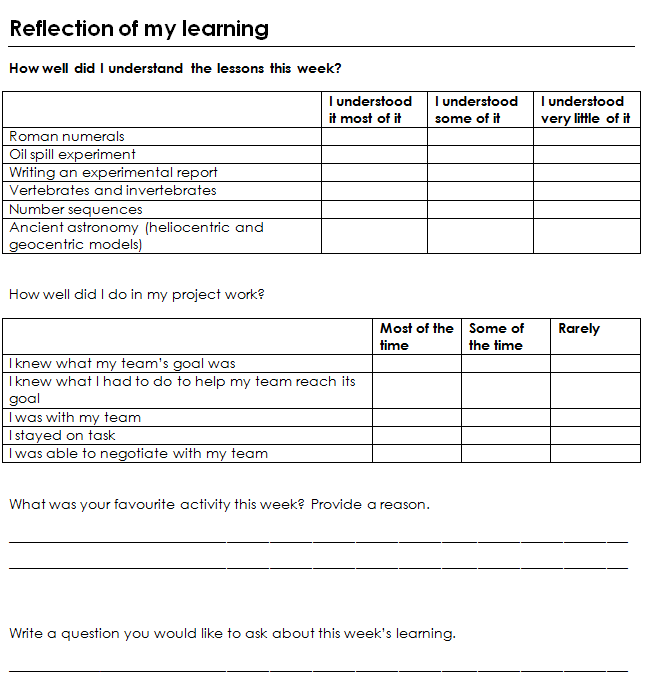
As Term 2 draws to a close I have surveyed my students again on their perception of classroom learning. I regularly gather and analyse feedback from my students in order to inform my future directions in designing their learning activities. Every week my students complete a “Reflection of my learning” survey and at the end of each term they complete a survey where they evaluate the teaching and learning of the term.

a screenshot of the reflection of my learning survey

This term has been my second term teaching an integrated curriculum class. I teach just one Year 7 class this year. I have this class for English, Maths, Science, Geography and History. This means that lessons often have content from a mixture of KLAs. This is a middle years initiative my school is implementing for the first time. The aim is to allow a smoother primary-secondary transition and to implement best practices in teaching and learning for middle years students.

Over the last two terms, I have also been experimenting with project based learning. My Year 7 class work on long term projects where on two hours every Monday and Friday, they work in teams on their projects. Our two latest projects are the 60 second science project (a combination of Science and English) and the Parthenon Project (a combination of History and Maths). In these projects, each team work at their own pace and they have choice over certain aspects of the project such us the method of presentation, the content, etc. To see some work samples from these projects, visit our class blog.

So what do the students think? Here are the main themes from the results:

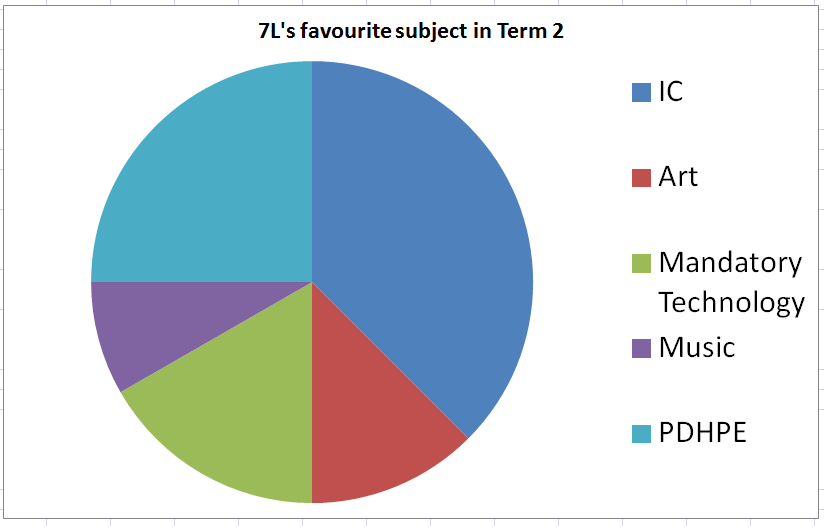
Integrated Curriculum is most of the students’ favourite subject. (Note that in Term 1 PDPHE was most students’ favourite subject)

A pie graph showing students' favourite subjects

The reasons cited by students for Integrated Curriculum being their favourite subject followed several themes, which were:

  • Having learning activities they thought was fun and interesting
  • Having an enthusiastic teacher who makes the class fun and interesting
  • Students noticing how they improved – We have been implementing the goals, medals and missions model of feedback over these two terms. I don’t give out marks or grades.
  • Project based learning – Students mentioned how they liked having more freedom and choice over the way they presented their learning in these projects. One student mentioned that most lessons are about getting “the right answer” while she is able to express herself more creatively in projects
  • Learning different subjects together
  • Doing science experiments – The most interesting thing from this was that students mentioned how they enjoyed doing experiments where they did not know what will happen. They also mentioned how they liked experiments that allowed them to see changes overtime. We have been doing a lot of science experiments where the content was a mixture of science and geography. They were environmental science activities from Murder Under the Microscope where experiments required observations over several days. Students did not mention they enjoyed science experiments because they involved explosions or flames, which are often mentioned by students in previous year groups.
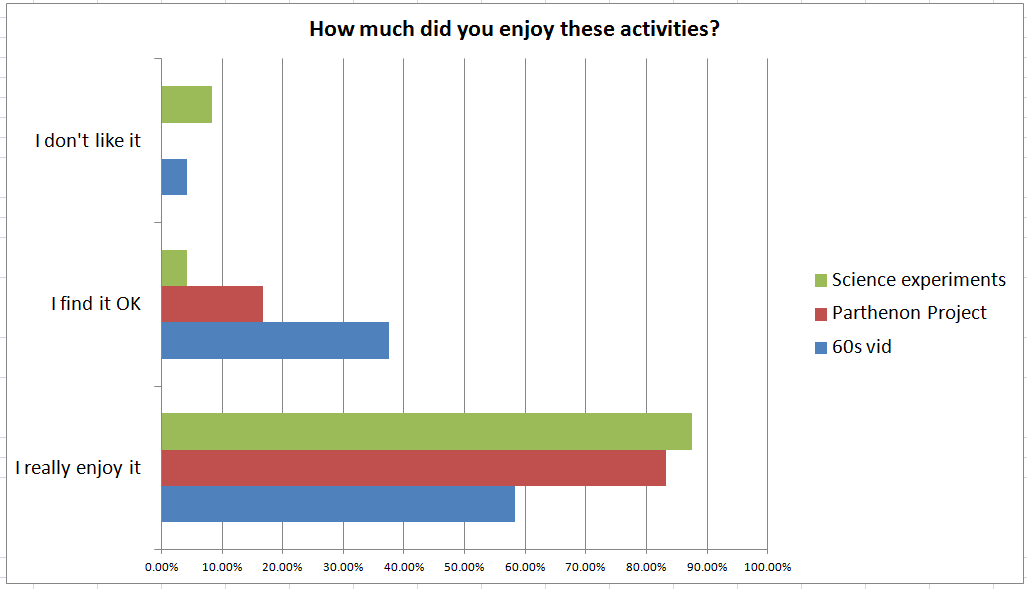
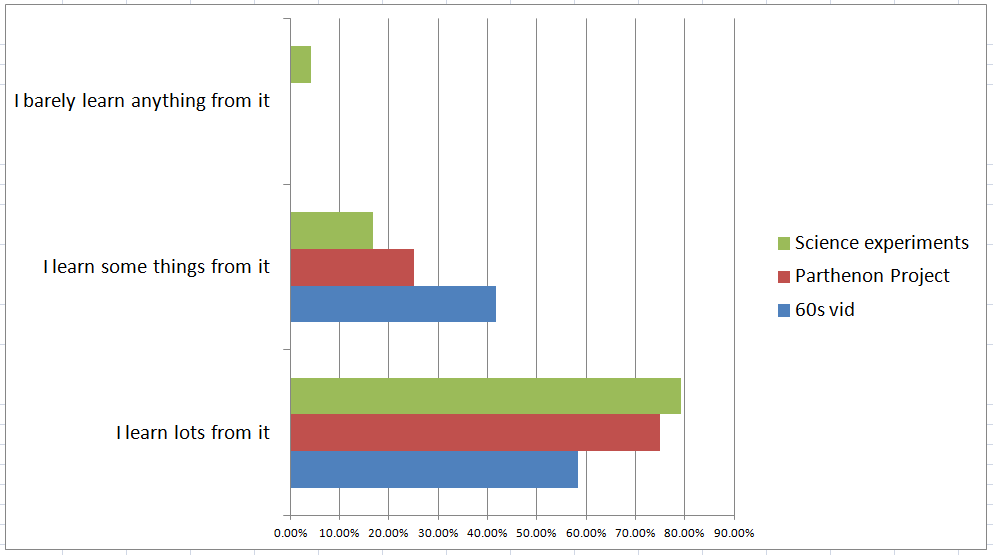
Students were also asked how much they enjoyed particular types of learning activities and how much they thought they learnt from them. The top three activities that students enjoyed learning were also the activities they felt they learnt the most from.
bar graph showing students' enjoyment of activities
bar graph showing how much students thought they learnt from different activities

When asked in the survey whether they would like to continue project based learning in Term 3, 100% of students answered yes. In my observations and conversations with students, they clearly enjoy project based learning and are on task most of the time. From my observations they are also learning important skills in self-regulation, time management and team work, which will become increasingly important in their later years of high school. From my conversations with students, many of them often say Mondays and Friday’s are their favourite days because they have “project time” and they get very disappointed when I have to sometimes move their project sessions to different days due to learning spaces and resources being booked out.

So where to now?

Well for one thing, I really want to lead my faculty in using data such as these weekly reflections and surveys to drive future directions in teaching and learning. I have found the weekly surveys to be an invaluable source of information to inform my teaching. Yes they take a long time to analyse but I have felt that my own teaching has improved massively because of it.

I am also going to continue project based learning. PBL has been a highly stressful experience at times (see my previous posts). Students enjoy doing them and feel they are learning lots from it. Their formal assessment results also show they are achieving highly as well. So it’s a win-win situation 🙂

I find it interesting that the results show such a positive response for science. There is a trend for students in Year 7/8 to lose interest in science. Many science teachers think that students need to be engaged through explosive experiments. My Year 7s’ survey responses show a different story. They liked experiments which were long term and where they did not know the results before doing the experiment. This data will allow us to better design science learning for our other students.

Action learning with Minecraft

This year I have one year 7 class. Yes, only one class. I’m a high school teacher so this is a massive change. The year 7 class I have is an integrated curriculum class. This means I have them for English, Maths, Science, History and Geography. I saw this as the perfect opportunity to try out project based learning. For the past 8 weeks or so, we have been working on a project called 60 second science where students worked in teams to produce a video lasting no longer than 60 seconds. Students can choose a topic for their video from astronomy, classification or microbes. We just had our last “project session” for this project. The majority of groups have now submitted their videos. Here is one of the videos:

In one of my previous posts, I have said one of the biggest challenges in project based learning was students’ self regulation skills. While the majority of students worked really well, there was a small group of students who regularly walked around, didn’t stay with their teams and did not focus on the task for lengthy periods of time. Even when they had to state their goals at the beginning of their project sessions and had mid session checkpoints, they still had difficulties staying on track. To put things in perspective, these students work really well in traditional learning activities. When we do quizzes, maths worksheets and other teacher-centred activities they are your perfect students.

In my previous post, I said I would need to put more checkpoints into the project process. But I wasn’t sure what I would do in these checkpoints. Do I just simply ask the students whether they are on track? Do I look at their work and say they’re doing well? I knew if I don’t do something different, the next project will involve me telling off the same students by constantly reminding them to stay with their teams and stay on task. I want my students to self regulate and doing this won’t allow them to develop those skills. I’m also not a big fan of using fear to force students to self regulate (well, it’s not really self regulation if you have to threaten detentions for students to stay on task).

So I’ve decided to undertake an action learning project. I had an inkling that the students who experienced difficulties in self regulation didn’t know how they were progressing during their projects. They were thrown into an eight week project without regularly knowing what things they were doing effectively and what things they need to improve on. While I did have the project broken up into four phases, it didn’t have a formalised way for students to self assess. So I’m doing an action learning project to find out whether formalised feedback cycles will improve student regulation in project based learning.

I’ve so far collected some baseline data from the weekly survey I give to my students.

student survey results for self regulation

The data shows that a small group of students:

  • don’t know what the team’s goals were
  • did know what their team’s goals were but did not know what they can do to help their team achieve those goals
  • didn’t know how to negotiate with their team

From the data I think I had a few lost lambs in the classroom, who knew they were meant to be creating a video, who had done their scripting and storyboarding, but couldn’t piece them together.

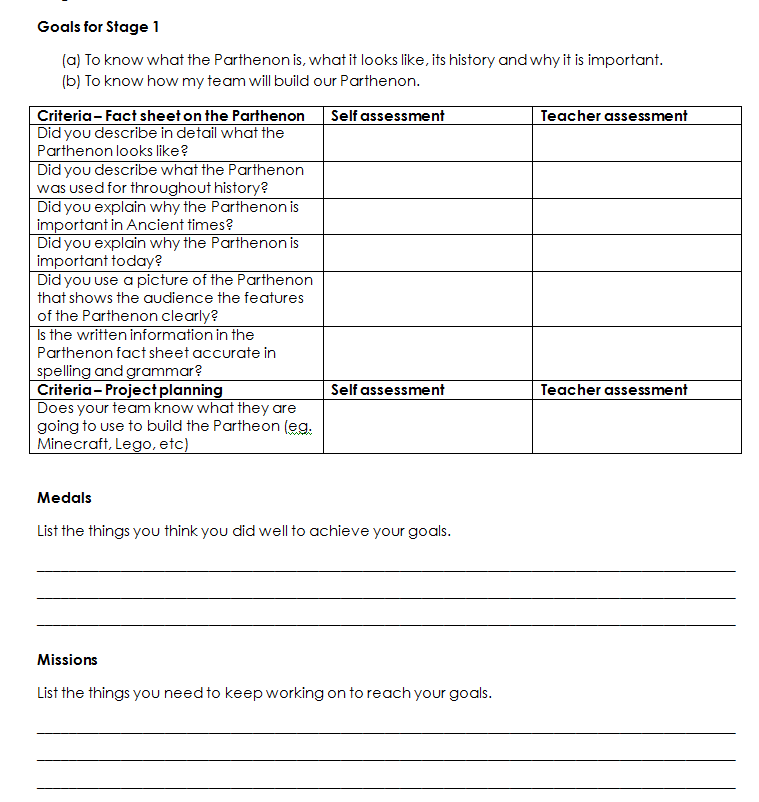
So for their next project, I will be embedding feedback cycles in the form of goals, medals and missions, which we already use for our writing tasks. Our next project will be The Parthenon Project. It will involve Year 7s building a model Parthenon that follows the golden ratio, a somewhat “magical” number that the ancient Greeks used a lot in their architecture and art (and we still use today). Year 7s will be able to construct their Parthenon in Minecraft or with other materials like Lego. The project will have four stages: (1) Research and project planning; (2) Planning the Parthenon; (3) Constructing the Parthenon; and (4) Presenting the Parthenon. Each stage will involve student self assessment and teacher self assessment to allow students to monitor their own progress and learning process. The assessment will be based on a product that students produce at the end of each stage.

project outline for Parthenon Project

self assessment sample for Parthenon project

Students will continue to complete their weekly survey and that data will be used to see whether the feedback cycle will have any impact. The Parthenon Project starts this Friday. I’ll keep you updated. 🙂

Lessons learnt from project based learning

This year I embarked on a journey of project based learning with my year 7 class. The Year 7s have been doing mini projects in the first term. They have made infographics, videos and models. These mini projects allowed them to develop team work skills, time management skills and self-regulation skills.

At the moment, my Year 7s are doing their first long-term project. They are now working in teams to make a one-minute long video to explain an astronomical concept (the occurrence of day and night, seasons, tides, etc). They will enter the video into the 60 second science competition.  This project didn’t involve a simple point-and-shoot video. The project had four phases: (1) Research; (2) Pre-production (scripting and storyboarding); (3) Filming; and (4) Post production. Students were guided through the processes of scripting, storyboarding and using video editing software for post-production.

We have 4 hours of “project time” a week and most students are on task. Each team needs to state their goals and also say why they needed certain equipment (such as iPads and laptops) before they started.

So far most teams are progressing well:

  • One team is extremely well prepared. They have spent time and effort into their script and storyboard. They have organised props and are filming against a Chroma key background. They will soon be working with a teacher who specialised post production skills to edit their video. This group is doing really well.
  • One team is highly experienced in creating videos, especially animated videos. They now spend their dedicated project lessons doing highly technical things that they learn from watching video tutorials.
  •  One team is now up to their post –production phase. This group was a little less prepared than the other teams in their scripts and storyboarding, so they found it difficult to negotiate during filming as each person had a different idea of how it should be done. In the end (with some suggestions on how to negotiate and compromise), they were able to finish their filming.
  • One team is using GoAnimate to make their video. This team has also completed a fairly detailed script and storyboard so their filming process was also straight forward.

However, one team is not progressing as well. They have changed their scripts and storyboard multiple times and is the only group who haven’t started filming. This team works well in traditional classroom activities, but seems to be overwhelmed in project based learning. Even when they state their goals at the start of a session, the goals would often change.

So the lessons I have learnt so far is:

  • Have more checkpoints in the project phases – Even though I broke up the project into the stages of research, pre-production, filming and post production, I should’ve built in checkpoints within each phase. For example, students had to get feedback from another group about their storyboard after drawing three scenes. This would’ve helped students gain more regular feedback.
  • Have a half session checkpoint where each group needs to report on the progress in reaching their goal.
  • Have restrictions placed on the task – Next time I would not only specify the video is 60 seconds long, but only contains a certain number of scenes. This would’ve prevented students from going overboard and becoming overwhelmed with the process.
  • Have small sessions on how to work in a team, how to communicate effectively and how to negotiate and compromise.
  • Have each group nominate a project manager who is responsible for making sure the team stays on track.

I am just a beginner in project based learning and I am learning a lot of lessons. What lessons have you learnt from project based learning?

Project based learning – a continuing journey

I have been embarking on a journey this year that is transforming my teaching practice. I have always liked to experiment with different teaching and learning strategies, but they’ve always had constraints that were beyond my immediate control, which included running them within one hour periods and within one subject area (when I knew it had so much potential for cross curricular opportunities)

Now that I’m teaching a year 7 class in English, maths, science, geography and history, I have more opportunities to try things like project based learning. I see my year 7 class the whole day on Mondays and Fridays and they’re our “project days”. That just means on Mondays and Fridays we have at least two to three hours where students work in teams on projects. These projects span from one week to a few months. They all involve students working in teams,, determining their project goals, working out a timeline to achieve those goals and producing a product that they think best demonstrates their learning. The process of getting to the end product is just as important as the end product itself. the process of the project is adapted from the design process.

design process

To build student capacity to undertake such activities, we started with relatively small projects that were heavily scaffolded. These projects were completed within a few hours over a couple of days so that students can get used to working in a team and practise self-regulatory behaviours. Students then moved onto a project that required a couple of weeks to complete and involved them designing a question about the people of the school, creating a survey to answer the question and then creating a more complex infographic than the previous project. Some students chose to draw graphs on a poster, while others decided to make a video.

In each project, students completed an ‘evaluation of my learning’ activity, which involve students reflecting on:

  • whether they have achieved their goals and why (most students are quite honest with this question, often citing the completion of some tasks were held back because they were distracted for some period of time)
  • how they knew they’ve done a good job
  • how they can improve on their next project (we still need to work on this more as many students still say “work faster”)

Students then review each other’s work and give feedback to each other. We then upload the learning products onto our class blog, Too School for Cool, so that a global audience can comment on the students’ work.

The project the year 7s are doing now is the 60 second science video challenge, which is their first long term project. The project involves students working in teams to create a one-minute video to explain a science concept. The project is divided into four phases: research, pre-production, production and post production. Most year 7 teams have completed their research, a draft script and a draft storyboard for their video. We have also learnt some of the easier script/screenplay conventions and also camera angles for the storyboard.

So these projects with year 7s have been working well so far. When I surveyed the class, the majority of students said they enjoyed doing the projects, learnt a lot from doing them and would like to continue doing projects in the following term.

For me personally, it is a continuing learning journey. I have experimented with similar project based learning activities last year, mainly with games based learning. However, this is the first time where I have been able to implement project based learning continuously for a much longer time. I think it does make learning more meaningful for students and allows them to create products that demonstrate their understanding, that shows me much more on what my students can do and need to improve on in comparison to traditional lessons that lead up to a topic test. Lessons also place a lot of emphasis on the process of learning, which is often lacking in more traditional-styled lessons.

However there are some challenges that I am exploring and implementing strategies for, such as:

  • Continuing to build some students’ abilities to negotiate in teams (some teams often break up as they can’t agree on minor details like whether to do a presentation or a video and we had to play some games and do role plays to show the importance of communication in team work)
  • Some students needing much more help in self regulation than others
  • Students being up to different parts of their project – This sounds relatively minor but it’s the biggest challenge I face at the moment. For example, in the last few weeks of term 1, some teams were still researching, other teams were writing their scripts and about three teams were ready to do their storyboards. It was difficult to determine when I should stop the whole class and have a quick session on how to draw storyboards because three teams were up to it or teach it to each cluster of teams when they were ready to do the storyboards. One of the biggest challenges are towards the end of projects when a few teams finish and some teams haven’t. This isn’t like some kids finishing a worksheet a few minutes before the others. Since these are projects spanning weeks, some teams might finish a few hours or a few days before others


Overall I find project based learning requires a lot more effort to design learning experiences for than the more traditional lessons, but projects provide more intellectual rigour and allow students to enjoy learning rather than seeing it as ‘school work’.

I’m more than happy to continue this journey and I don’t see myself turning back.

The future of science education in Australia – there is an elephant is in the room and no one is looking

When I took on my first Year 11 physics class in 2007, I remember saying this to a colleague:

“I do so many things to make science interesting in Year 7-10. But when it comes to Year 11 and 12, it all goes out the window. It’s just about learning the dot points.”

I was reiterating what many senior science teachers feel – science in the senior years of high school is mostly about passing on content, making sure students can remember the content and pass the exam so they can get into the university course they want. (Note: I still do engaging activities with my senior students. I just have less time to do it)

This is one of the major findings in the report “The Status and Quality of Year 11 and 12 Science in Australian Schools”. The report indicated that science in the senior years of high school is mostly taught via the traditional transmission model, driven by the perception of teachers and students that the purpose of Year 11 and 12 science is to get them into university and prepare them for university. According to the report this has made the senior science curricular cramped with so much content that teachers don’t feel like they have enough time to integrate the social aspects of science and students feel they don’t have enough time to think about what they are learning. These quotes from students in the report sums up how students feel about science as they progress through high school:

“Science just got harder and harder … it went from like fun and exciting to like boring and numbers.”

“There is a major difference [between junior and senior science]. In junior they had to make it fun and interesting otherwise we just wouldn’t have done it.”


While the report pointed out that junior science is more about scientific literacy rather than just content, and allows more flexibility to make it more engaging, the report did indicate that the transmission model of teaching has filtered down to junior science in for some students, perhaps in order to prepare students for senior science.

Some other interesting points of the report are:

For students who don’t chose not to study science in year 11 and 12:

  • Many of these students like science and think learning about science is important
  • These students often had negative experiences in year 7 to 10 science, but still think science is important to learn
  • Some of these students have been counselled against studying science in year 11 and 12 because teachers and career advisers think it is too difficult for them and will not help their university entrance score

For students who do choose to study science in year 11 and 12:

  • The majority of these students indicate that the purpose of year 11  and 12 science is to get into a university course they want to apply for and/or meet prerequisite requirements set by universities
  • These students also think that science is enjoyable to learn

So the trends are showing that many students have an intrinsic interest in science and think it is important, but they are turned off from studying science.

The report made several recommendations including:

  • Setting a realistic amount of content in senior science courses so that the social aspects of science and science inquiry skills can be included
  • Making junior science more interesting by using an inquiry based approach where learning has authentic contexts and audiences

I wholly agree with the second recommendation. However it seems to me that the report in general appears to be avoiding the elephant in the room – that a summative, high stakes, university entrance exam is possibly driving pedagogy in year 11 and 12 science and unless that changes, it will continue to do so. The report findings such as an overcrowded curriculum, students copying notes from the board and a focus on memorisation, are typical teaching strategies that result from trying to maximise scores in high stakes exams.

The report overall asks this question: “Are we as a nation content that only half our senior secondary students are studying science?”


I would like to ask these questions instead:

  •  If year 11 and 12 science is to prepare students for university, when did universities say they wanted students who spend most of their time copying notes, memorising a lot of facts and not have enough time to think about what they are doing? How does this prepare them for university?


  •  Are we as nation content with our future scientists and innovators being prepared to solve the complex problems of the 21st century by being encouraged and rewarded for low level thinking?


  • If we reduce the amount of content in year 11 and 12 science would it have any impact on the way it is taught if there is still a high stakes university entrance exam?


Perhaps there should be a recommendation of getting rid of university entrance exams as they currently are and look at alternative models of university entry. Without the exam, students will be able to learn science for the love of science and not as a means to an end.

Energy: Our Future

I’m making this post because I’m super-excited about this. For the past 6 hours, my colleague (Twitter: @HenryYavuz) and I have been re-thinking our approach to Year 9 Science. We want to make it more relevant and engaging for the students. We want students to realise they can make an impact on the world and change it!

In the past Term 1 involved students learning about atoms, electricity and nuclear energy. Atoms involved just teaching about atoms and the periodic table and the topic lacked context. Electricity and nuclear energy are OK but they don’t allow much scope for students to connect their learning to audiences outside the classroom. So we came up with the idea of using the looming energy crisis as the main theme for the topic, a problem that our Year 9s will face as adults.

Students will work in teams to act as advisors to make recommendations for Australia’s future in energy. They will need to investigate the social, economical, scientific, environmental and legal implications of coal energy, nuclear energy, solar energy, wind energy and biomass in order to recommend whether Australia should:

  • Continue with coal powered stations
  • Adopt nuclear energy
  • Expand on solar energy
  • Expand on wind energy
  • Expand on biomass
  • A combination of any or all of the above

They will present a written report to persuade the adoption of their recommendation. They will also need to make a presentation on their recommendation to a (mock) panel of government reps.

To ensure students will be successful in this task, we have set up mini tasks that will act as learning artefacts for students to demonstrate their understanding and provide the scope for regular feedback. These mini tasks will be uploaded to their electronic portfolio (a blog). The mini tasks are:

  • A timeline of how energy sources and use have changed overtime
  • Using a model of the atom to explain how electricity works and describe the benefits and limitations of models
  • A summary of the social, economical, legal, scientific, etc pros and cons of different types of energy
  • An exposition of whether radioactive waste should be moved from Hunters Hill to the Auburn-Lidcombe LGA

Students will also be uploading a learning journal and other learning artefacts onto their blog. Each group will be assigned a “buddy group” so they can comment on each other’s blogs.

So far this is what we got. We’ve started to nut out the learning sequence.

What do you think of it so far? If you were a 14 year old, would you find this engaging and meaningful? Are we trying to do too much?

Feedback is welcome 🙂